Most buyers walk into this decision with three assumptions already fixed. Diesel is the economical one. Hybrids are expensive and complicated. Petrol is just what you buy when you don't want to think about it.
At least one of those is wrong right now. Diesel costs more per litre than petrol at Tanzanian pumps, and has done consistently through 2026. That single fact undoes the usual reasoning behind picking a diesel car, and it's the sort of thing you only discover after you've already paid.
So the honest answer to "which fuel type is best" depends entirely on where and how you drive. This guide walks through what each one actually costs to run in Tanzania, and how the engine you choose feeds into your TRA duty bill.
Quick Answer
- Hybrid is the strongest fit for Dar es Salaam city driving, with Toyota Aqua and Axio hybrids returning 25 to 33 km/L in East African urban traffic (based on Toyota JP official specifications for East African urban conditions).
- Petrol is the practical pick for long-distance, upcountry and first-time buyers.
- Diesel is not cheaper at the pump. EWURA capped Dar es Salaam diesel at TZS 3,978/L against petrol at TZS 3,898/L in August 2026.
- Engine size can push you into a higher excise bracket, so factor it in before you fall for a big engine.
- Hybrids are not maintenance-free. Budget for the battery eventually.
Why Is Fuel Type a Bigger Decision in Tanzania Than Elsewhere?
Fuel type carries more weight here than in the UK or South Africa for three reasons that stack on top of each other. EWURA caps prices nationally, fuel access thins out fast beyond the main towns, and the engine you pick affects your import duty bill. Tanzania's mainland had 2,597 licensed petrol stations as of mid-2024 (Tanzania Petroleum, January 2025), heavily clustered in urban centres.
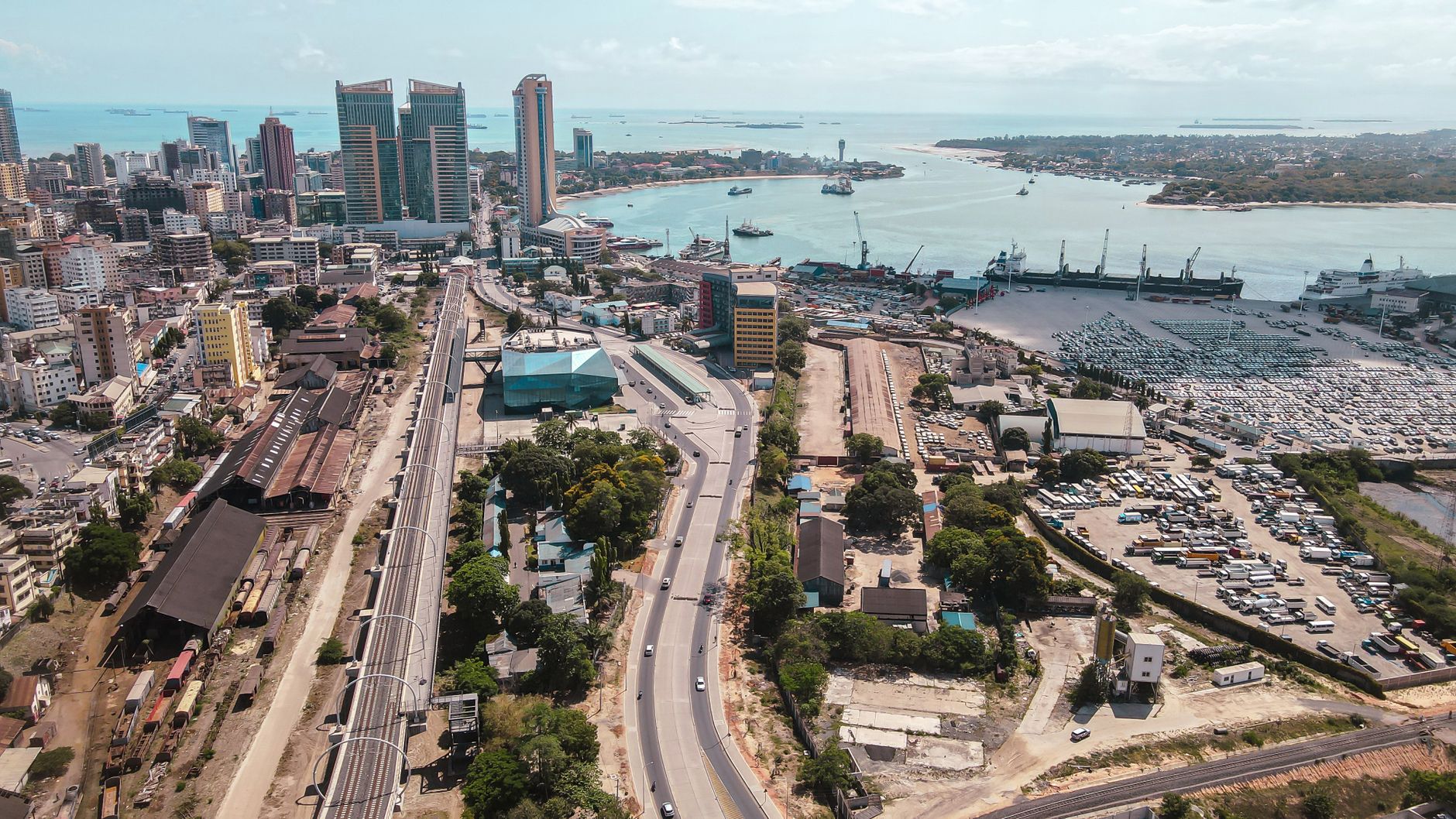 Dar es Salaam skyline and harbour seen from above.
The pricing point matters most. EWURA publishes a cap per region and every station charges it, so there's no shopping around for a better rate. What the cap says is what you pay, whether you're in Kariakoo or Kigoma.
Availability is the second squeeze. Rural communities often travel long distances to reach a licensed station, with informal jerrycan traders filling the gap (Rural Energy Agency, reported August 2026). That's fine for petrol. It's much less fine for a diesel engine that's fussy about fuel quality.
Petrol vs Diesel vs Hybrid at a Glance
Here's the short version before we get into each one. Prices below are the August 2026 EWURA caps for Dar es Salaam, and duty figures come from Carbarn's published import rules.
|
Petrol |
Diesel |
Hybrid |
| Pump price (Dar es Salaam, Aug 2026) |
TZS 3,898/L |
TZS 3,978/L |
Runs on petrol |
| Real-world urban economy |
14–18 km/L (est.)† |
12–16 km/L (est.)† |
25–33 km/L* |
| Import duty |
25% of CIF |
25% of CIF |
25% of CIF |
| Excise by engine size |
0% / 5% / 10% by cc |
0% / 5% / 10% by cc |
0% / 5% / 10% by cc |
| Fuel access upcountry |
Widest |
Wide, but pricier |
Widest (petrol-backed) |
| Best suited to |
City commuters, first-timers, upcountry buyers |
Heavy loads, long-haul commercial |
Dar es Salaam commuters |
Duty structure as published on Carbarn's import rules page. CIF means cost, insurance and freight, the landed value TRA assesses duty against. Final figures come on your proforma invoice.
† Petrol and diesel urban economy figures are estimated JP-market reference figures for equivalent vehicle classes; individual results vary by engine size, load, and driving conditions.
* Based on Toyota JP official specifications for East African urban conditions.
Is Petrol Still the Right Default for Tanzanian Buyers?
For a large share of buyers, yes. Petrol accounts for roughly 64% of Tanzania's used car market in 2025 according to Mordor Intelligence's Tanzania used car market report (paywalled), and that dominance reflects something practical rather than habit. Petrol cars are easier to find, cheaper to service, and the fuel is available from Dar to Tunduma without you having to plan around it.
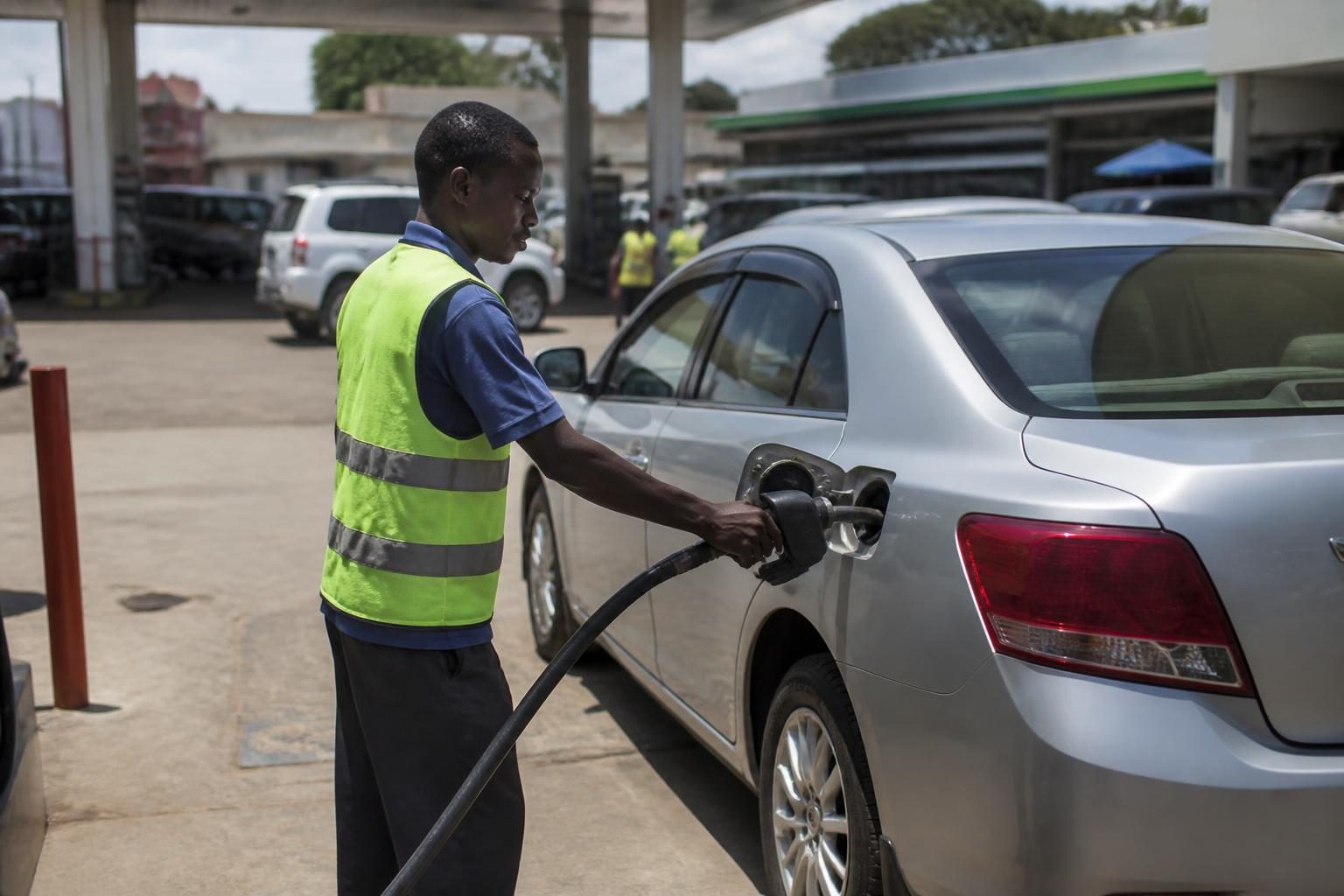 An attendant refuels a silver sedan at an urban service station.
Who Petrol Suits Best
Three buyer profiles keep coming back to petrol, and they're all reasoning correctly.
The first is the Dar commuter who simply doesn't want to think about the technology. No high-voltage battery, no specialist diagnostics, any garage can handle it.
The second is the upcountry buyer. If your driving takes you past the last reliable station on a route, the fuel that's most widely stocked wins on availability alone.
The third is the first-time importer. Petrol keeps the purchase price and the duty maths as predictable as possible, which counts for a lot on your first shipment.
Where Petrol Loses Ground
In stop-start traffic, a petrol engine burns fuel the entire time it's sitting still. If you're doing 60 to 80 km a day through Dar rush hour, that idling cost compounds quietly over a year.
A smaller engine, say 1.0L to 1.3L, softens the hit and keeps you in a lower excise band. It doesn't close the gap against a hybrid in the same conditions, though. Nothing petrol-only does.
Does Diesel Still Make Financial Sense in Tanzania?
Not for most private buyers, and the pump price is why. In August 2026 EWURA capped Dar es Salaam diesel at TZS 3,978 per litre against petrol at TZS 3,898. That gap holds across regions, from Arusha to Mwanza to Tunduma. The assumption that diesel is the cheaper fuel simply does not describe the Tanzanian market right now.
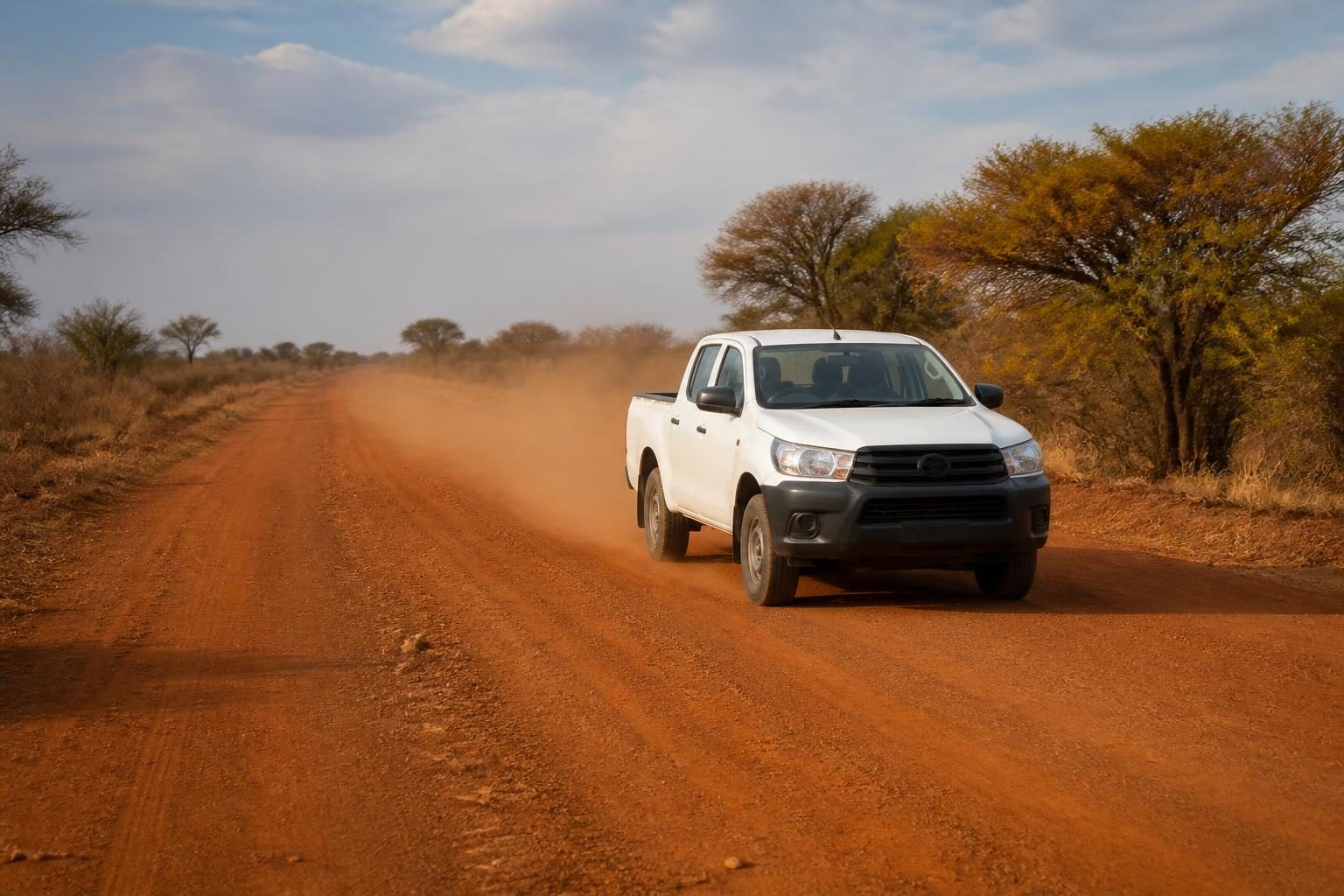 A white pickup travels along a dusty red rural road at golden hour.
Where Diesel Still Has a Genuine Case
Diesel hasn't stopped making sense everywhere. It's still the right engine for heavy-load and long-haul work: delivery vans, agricultural vehicles, buses, anything that spends its life loaded.
If you're regularly running 400 km or more upcountry, torque under load matters more to you than urban economy does. Commercial operators run longer distances at speed. Per-kilometre cost still works in their favour, even at the higher pump price.
Why It's a Hard Sell for City Cars
Diesel engines want regular high-speed running to stay clean. Dar traffic gives them the opposite, and engines that live on short urban cycles tend to cost more in maintenance over time.
Put that together with fuel that now costs more per litre, not less, and the traditional break-even argument gets very hard to make for a private passenger car in the city.
Why Does Dar es Salaam Traffic Make the Case for Hybrids?
Because a full hybrid is designed for exactly the driving that frustrates every other engine. It runs on its electric motor at low speeds and recovers energy under braking, which is most of what happens on Sam Nujoma Road at 5pm. The Toyota Aqua and Axio hybrids consistently return 25 to 33 km/L in East African urban traffic (Toyota JP official specifications, adapted for urban conditions), against 14 to 18 km/L for a comparable petrol car.
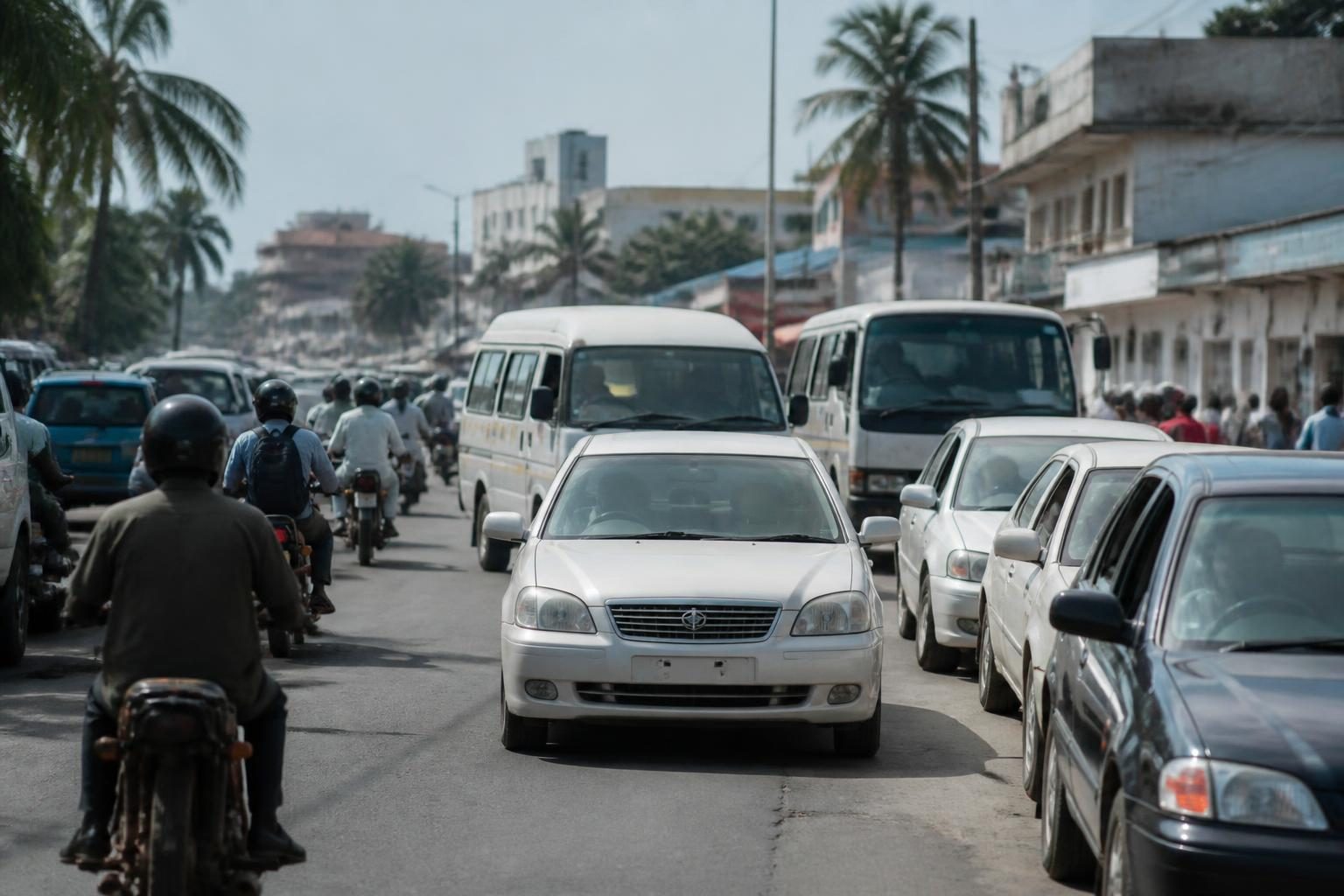 Midday congestion on a palm-lined city street with cars, minibuses and motorcycles.
How Big Is the Real Saving?
Independent testing backs the pattern. Which? UK measured full hybrids at 49.9 mpg combined against 42 mpg for petrol in its April 2026 comparison, and the town figure was the striking one at 66.1 mpg. The advantage widens as the traffic gets worse.
At current EWURA petrol prices, the saving is real and calculable. A buyer covering 70 km a day uses roughly 131 litres of petrol a month at 16 km/L, against about 72 litres a month in a hybrid at 29 km/L. At TZS 3,898 per litre, that's approximately TZS 230,000 less on fuel each month — a rough estimate based on midpoint efficiency figures, but concrete enough to factor into a purchase decision. Run it against your own mileage, though. A hybrid on the Morogoro highway returns far less of that advantage.
What Hybrids Are Not
They are not maintenance-free, and anyone telling you otherwise is selling something. The traction battery is a real future cost. It's rarely urgent on a younger, lower-kilometre car, and it becomes a genuine planning item on anything past 100,000 km.
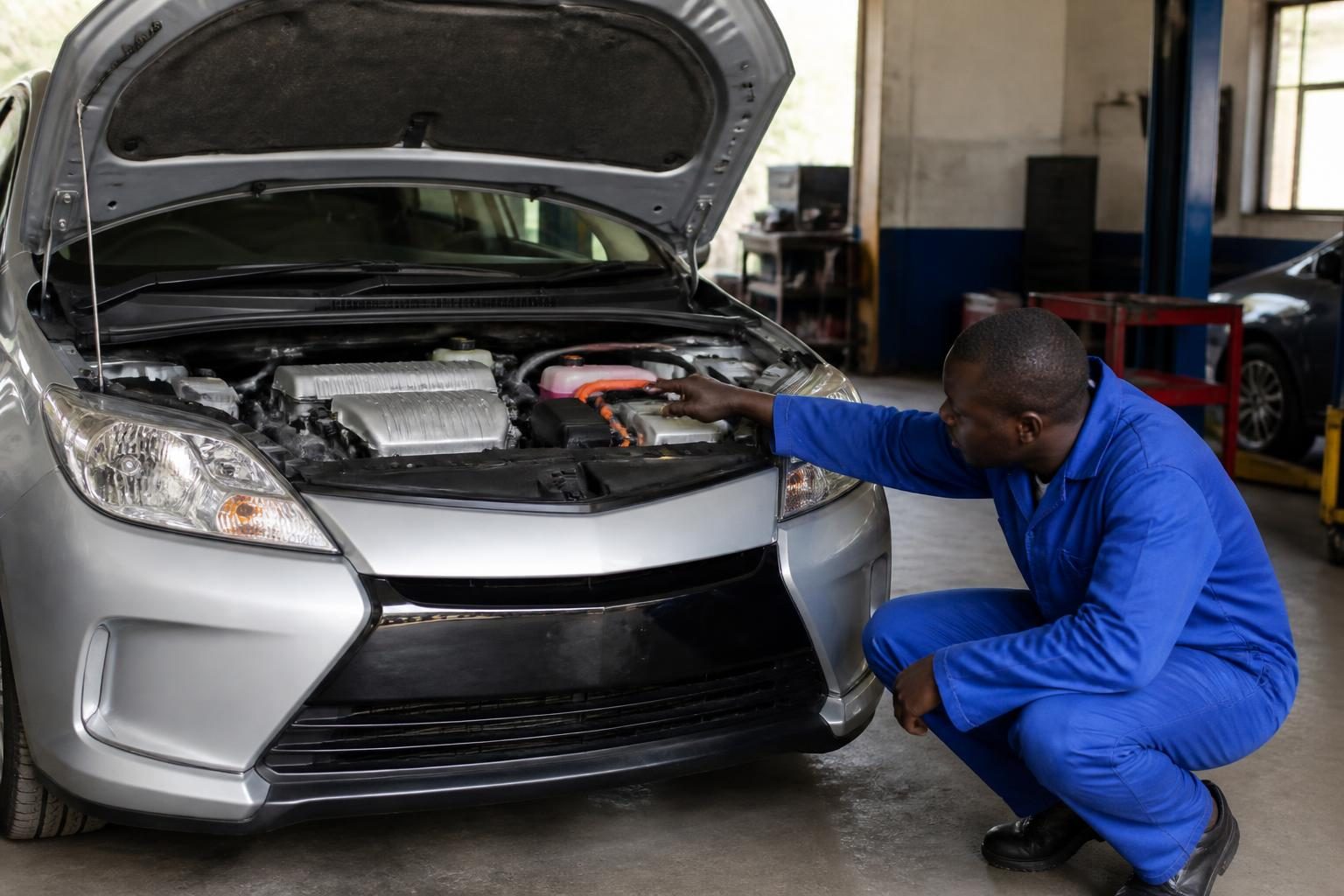 A mechanic inspects high-voltage wiring under a hybrid car's open hood.
Servicing is the other consideration. Hybrid-competent mechanics exist in Dar es Salaam, but they thin out quickly once you leave the city.
The Duty Angle on Engine Size
Hybrids are not duty-free. Import duty stays at 25% of CIF value across all three fuel types, as published on Carbarn's import rules and duty structure page. Excise then applies at 5% for engines up to 2000cc and 10% for engines above 2000cc. Vehicles also attract an age-related excise surcharge: 18% for vehicles 8 to 10 years old, 35% for 10 to 20 years, and 40% for over 20 years, per the Finance Act 2026 published by the Tanzania Revenue Authority (effective 1 July 2026). Confirm current rates with TRA or a licensed clearing agent before you commit, as the Finance Act is revised annually.
That's where engine size earns its attention. A 1.5L or 1.8L hybrid sits in the same 5% excise band as a 2.0L diesel — both fall within the 1001cc to 2000cc range. The band difference only kicks in against engines above 2000cc, which attract 10%. It's the choice between a 1.5L hybrid and a 2.5L or larger diesel where the duty saving becomes visible on your invoice. Duty, VAT and customs clearance are all paid separately to TRA on top of the vehicle price. Check the numbers against the specific car, not a general rule.
Which Fuel Type Is Right for You?
If you drive mostly in Dar es Salaam: hybrid, comfortably. Stop-start traffic is the one condition where the technology pays for itself rather than just sounding clever. The saving at current EWURA prices is real, and the city has enough specialist mechanics to keep servicing manageable.
If you travel long distances or live outside a major town: petrol. Fuel access is widest, purchase prices are generally lower, and mechanical simplicity means any garage on the route can help you. Keep the engine small and your excise band stays low too.
If you're weighing up a diesel private car: think hard about it. The pump price is higher than petrol, not lower, and city driving is unkind to the engine. Without a genuine commercial or heavy-load case involving long open-road runs, the old arguments for diesel don't survive contact with the current numbers.
How Carbarn Makes the Duty Picture Clearer
Once you've settled on a fuel type, the next question is what a specific car will actually cost you landed in Dar es Salaam. Carbarn is a Japanese-owned exporter selling its own reconditioned stock direct to Tanzanian buyers, shipped RoRo from Japan in 25 to 35 days at sea.
Every vehicle page carries two inspection reports you can read before paying anything: the official Japanese auction sheet showing the auction grade and declared condition, plus an in-house Carbarn inspector report. Each page also shows an "Estimated landed cost in Tanzania" panel, which is where you see the duty and excise effect of that car's actual engine size rather than a generalised estimate.
You can browse by fuel type and engine capacity across Carbarn's inventory, read the full duty structure on the import rules page, or walk through the steps in the guide to how to buy a car from Japan. Final figures always come on your proforma invoice.