Tanzania imported TZS 343.2 billion of motor cars for household use in July to September 2026, according to Table 6.4 of the Bank of Tanzania (BoT) Quarterly Statistical Bulletin for the quarter ending September 2026. That is up from TZS 288.5 billion in the same quarter of 2025.
This post reads the one official figure plainly: where it comes from, what it counts, and what it can't tell you.
Quick Answer
- The figure: TZS 343.2 billion (TZS 343,201.7 million) of household motor car imports, Jul–Sep 2026, BoT Table 6.4.
- The change: up from TZS 288.5 billion a year earlier, a rise of about 19% by our calculation.
- What it counts: motor cars for household use, valued f.o.b. in TZS.
- What it leaves out: how many cars arrived, which models, or where they came from.
What does the Bank of Tanzania figure say?
The figure sits in Table 6.4 of the BoT Quarterly Statistical Bulletin for the quarter ending September 2026, under imports of motor cars for household use. The BoT publishes it in TZS million. Two values matter here: the latest quarter and the same quarter a year before.
| Quarter |
Value (TZS million, f.o.b.) |
Source |
| Jul–Sep 2025 |
288,530.2 |
BoT Quarterly Statistical Bulletin, Table 6.4 |
| Jul–Sep 2026 |
343,201.7 |
BoT Quarterly Statistical Bulletin, Table 6.4 |
The difference between the two quarters is TZS 54,671.5 million, by our calculation from the two table values. You can check the source yourself in the BoT Quarterly Statistical Bulletin for September 2026.
How do you read an f.o.b. import figure?
An f.o.b. import figure is the value of goods at the point they leave the exporting country, before shipping costs are added.
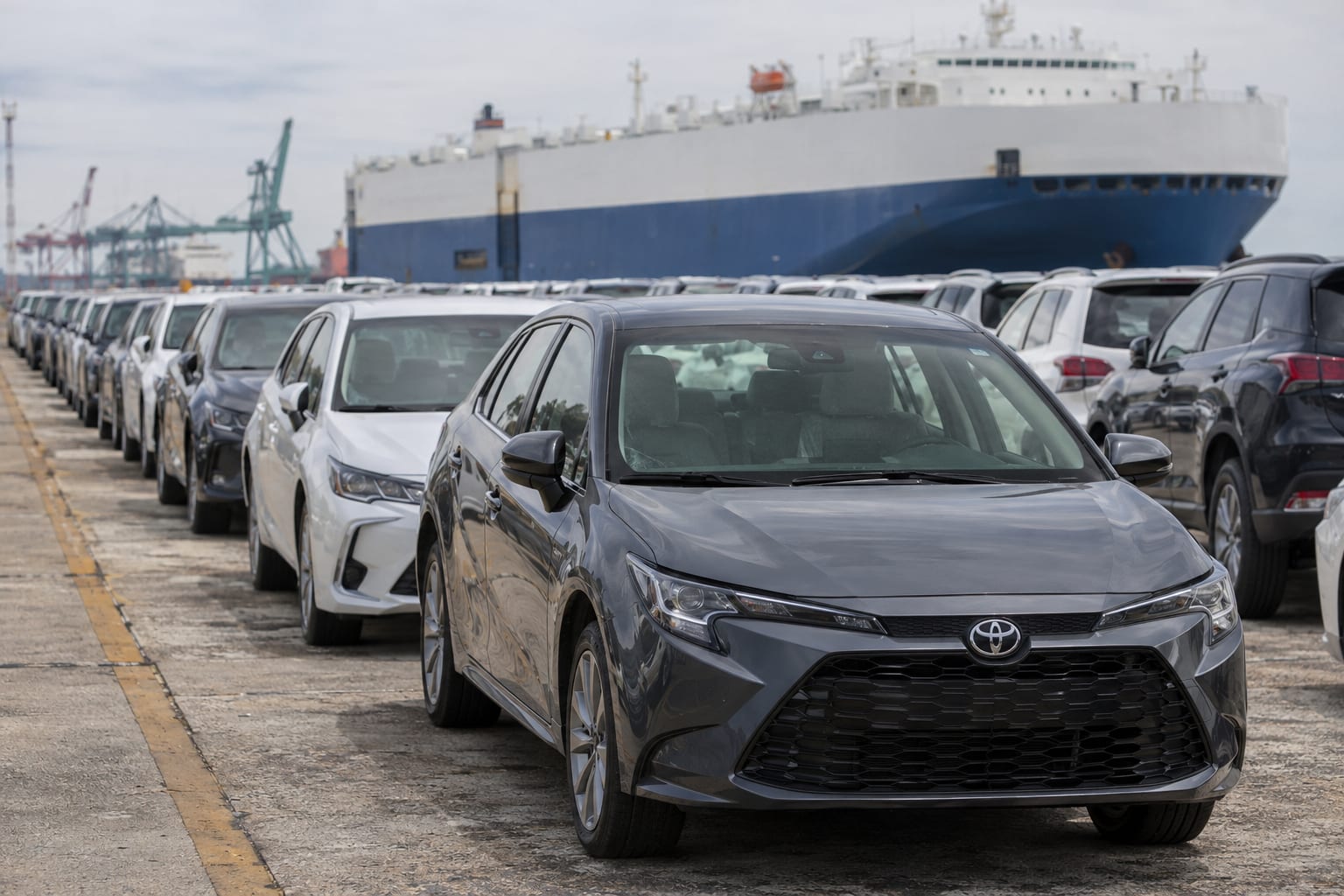 Illustration: Cars lined up on a port quay beside a cargo ship.
What does "household use" mean?
The table row is labelled motor cars for household use. The source line doesn't say where the cars came from or whether they were new or used, so neither does this article.
What does f.o.b. mean?
"Free on board" is a customs valuation term. It covers the cars at the port of export, loaded and ready to ship. It leaves out freight and insurance for the voyage to Tanzania.
Is it a value or a count?
It is money, not cars. TZS 343.2 billion tells you the total f.o.b. value of what came in. It doesn't tell you how many vehicles that was.
What does a rise of about 19% tell you?
The arithmetic is simple. The Jul–Sep 2026 value of TZS 343,201.7 million minus the Jul–Sep 2025 value of TZS 288,530.2 million gives TZS 54,671.5 million. Divide that by the earlier figure and you get about 19%, by our calculation from the BoT table.
What the figure can't do is explain itself. A value total can rise because more cars arrived, because the mix shifted towards dearer cars, or because prices at the port of export went up. Any of those, or a blend, would produce the same result. Nothing in Table 6.4 separates them.
What does it mean if you're buying a car?
For a buyer, the figure shows the size of the national market, not the cost of any single car.
If you want to see what that process looks like from the Japan side, Carbarn lists cars that are held in Japan and shipped to Dar es Salaam. Each listing shows its Japanese auction sheet and pre-shipment inspection so you can judge condition before you commit. You can browse the full range of cars to see what's available.
What this does not show
The figure is one row in one table. It doesn't show how many cars arrived, which models they were, whether they were new or used, or where they shipped from. It leaves out freight and insurance, and says nothing about import duty or other Tanzania Revenue Authority (TRA) charges paid after arrival.
Method and sources
- Source: Bank of Tanzania Quarterly Statistical Bulletin for the quarter ending September 2026, Table 6.4, imports of motor cars for household use, published in TZS million, f.o.b. Available at the BoT website.
- Values used: TZS 288,530.2 million (Jul–Sep 2025) and TZS 343,201.7 million (Jul–Sep 2026), taken as published.
- Our calculation: the difference of TZS 54,671.5 million and the rise of about 19% are our arithmetic from those two values. No exchange-rate conversion was made.