Fill up in Dar es Salaam today and the number on the pump display tells its own story. Petrol cost TZS 2,778 a litre in January 2026, according to EWURA's January cap price announcement, and reached TZS 3,990 by July, a rise of roughly 44% in seven months. The August cap eased to TZS 3,898. For a commuter covering 60 km a day, an ordinary 1.5-litre petrol car now swallows close to TZS 400,000 a month in fuel alone. This guide puts real shilling figures against six Japanese models, so you can see what each one actually costs to keep on the road.
The short answer
- A Toyota Aqua hybrid costs roughly TZS 171,500 a month in fuel on a 1,320 km Dar commute, calculated at the August 2026 EWURA cap of TZS 3,898/L.
- The Toyota Yaris Cross and Nissan Note e-POWER sit between TZS 186,000 and TZS 194,000 a month.
- A typical 1.5-litre non-hybrid on the same commute costs around TZS 396,000 a month, more than double the Aqua.
- Every model here falls in the 1,001cc to 2,000cc engine bracket, which carries 5% excise duty, half the 10% charged above 2,000cc, as published on Carbarn's import rules page.
- Over five years, that fuel gap alone is about TZS 13.4 million.
Why Have Fuel Costs Changed the Calculation in 2026?
Fuel has gone from a background expense to a decision-making factor. EWURA's April 2026 announcement lifted the Dar es Salaam petrol cap from TZS 2,864 to TZS 3,820 in a single month, a jump of about 33%. The Citizen linked the rise to Middle East supply disruption that began on 28 February 2026. Prices have eased since the July peak, but they remain well above where the year started.
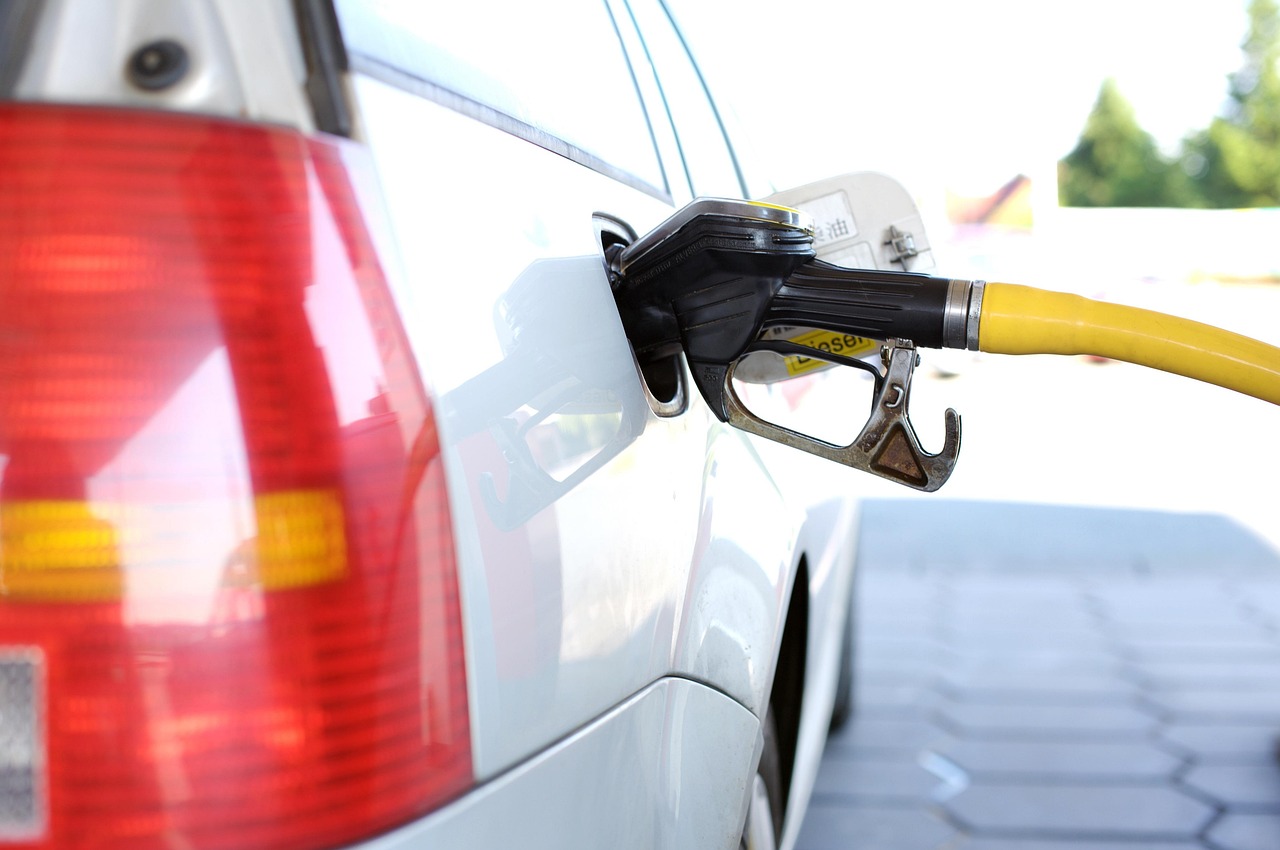 A silver car is refuelled with a yellow petrol pump nozzle.
| Month, 2026 |
Petrol cap price, Dar es Salaam |
| January |
TZS 2,778/L |
| February |
TZS 2,788/L |
| March |
TZS 2,864/L |
| April |
TZS 3,820/L |
| July (peak) |
TZS 3,990/L |
| August (current) |
TZS 3,898/L |
That table is why km/L figures matter now. A difference of 10 km/L used to be trivia. At today's cap price it is worth hundreds of thousands of shillings a year.
How Do These Six Models Compare?
Six vehicles were assessed on two things: official Japanese fuel economy figures, and what those figures translate into as a monthly shilling bill. The running-cost basis is TZS 3,898/L (EWURA, August 2026) across 1,320 km a month, which is 60 km a day over 22 working days. WLTC (the worldwide harmonised light-vehicle test cycle, the standard used for official Japanese fuel economy ratings) figures are measured in laboratory conditions, so each has been cut by 10% to reflect stop-start Dar traffic, air conditioning and road surfaces.
| Model |
Engine |
Fuel |
Official economy |
Real-world est. |
Est. monthly fuel |
USD band |
| Toyota Aqua 2022 |
1,500cc |
Hybrid |
33.6–35.8 km/L (WLTC) |
~30 km/L |
TZS 171,500 |
under $10,000 |
| Toyota Yaris Cross 2020 |
1,500cc |
Hybrid |
30.8 km/L (WLTC) |
~27.7 km/L |
TZS 185,900 |
$10,000–$15,000 |
| Nissan Note e-POWER 2022 |
1,200cc |
Series hybrid |
29.5 km/L (WLTC) |
~26.5 km/L |
TZS 194,100 |
under $10,000 |
| Toyota Yaris 2023 |
1,500cc |
Hybrid |
30.2 km/L (WLTC) |
~27.2 km/L |
~TZS 189,200 |
$10,000–$15,000 |
| Honda Fit 2018 |
1,500cc |
Hybrid |
36.4 km/L (JC08) |
~26 km/L |
~TZS 197,800 |
under $10,000 |
| Suzuki Swift 2018 |
1,200cc |
Petrol |
non-hybrid |
petrol range |
~TZS 380,000–400,000 |
under $8,000 |
| Typical 1.5L non-hybrid (benchmark) |
1,500cc |
Petrol |
n/a |
~13 km/L |
TZS 395,600 |
n/a |
Basis: TZS 3,898/L (EWURA, August 2026), 1,320 km/month. The Honda Fit figure uses Honda Japan's JC08 catalogue rating — JC08 typically overstates more than WLTC, so the real-world estimate applies a larger discount. Where no official figure is available for the exact grade, the row shows a described range.
Toyota Aqua, Tanzania's Benchmark for Fuel Efficiency
The Toyota Aqua is the car most Tanzanian buyers measure everything else against, and the arithmetic explains why. Everycar.jp lists the second-generation Aqua at 33.6 to 35.8 km/L on the WLTC cycle in front-wheel-drive form. Trim that by 10% for Dar conditions and you land near 30 km/L, which works out at roughly TZS 171,500 a month at the current EWURA cap. Nothing else in this group gets close.
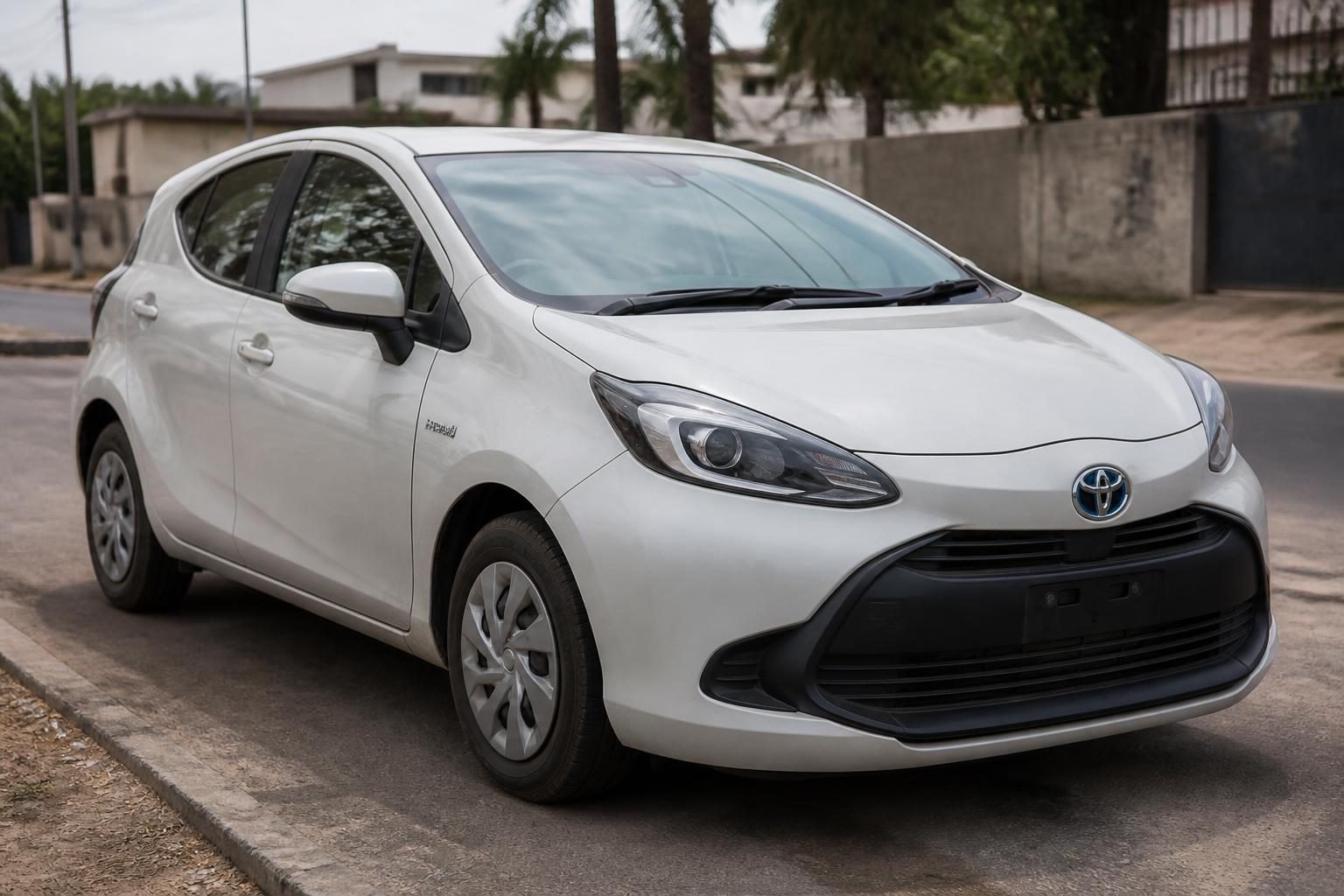 2022 Toyota Aqua
The 2022 car runs Toyota's M15A-FXE 1,500cc inline three-cylinder petrol engine, paired to the hybrid drive and rated at 91 in the listing's power figure. It drives the front wheels through an automatic transmission. The body is a five-seat hatchback measuring 4,050 mm long on a 2,600 mm wheelbase — compact enough for Kariakoo but with a usable rear bench. This particular car shows 104,000 km and carries auction grade 3.5. An auction grade is a condition score assigned by Japan's vehicle auction inspectors — grade 3.5 means good overall condition with minor cosmetic marks, and the inspection sheet tells you exactly which marks.
Who it suits: a daily commuter in Dar who wants the lowest monthly fuel spend and drives mostly on tarmac. Who it does not suit: anyone regularly on rough upcountry roads, where the low ride height becomes a nuisance.
Does the Nissan Note e-POWER Really Drive Like an EV?
The Nissan Note e-POWER works differently from a conventional hybrid, and the difference is one you feel in traffic. Its 1,200cc HR12DE three-cylinder petrol engine never drives the wheels. It runs purely as a generator, feeding an electric motor that does all the propulsion. The result is instant, quiet pull from standstill, which is worth a lot when you spend an hour crawling along Nyerere Road.
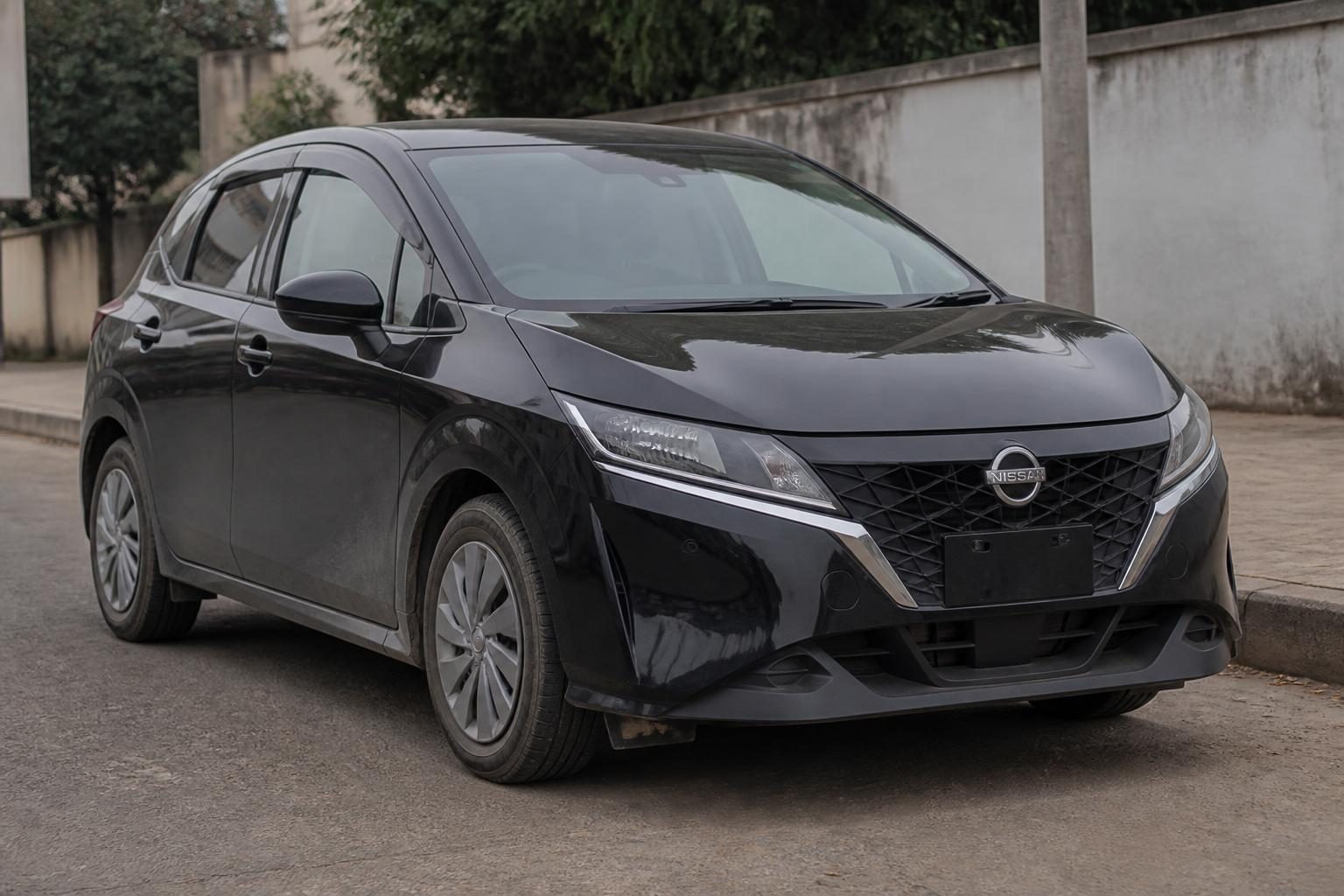 2022 Nissan Note e-POWER
Nissan Japan's WLTC figure for the front-wheel-drive E13 Note is 29.5 km/L, as reported by ElectricVehicleWeb. Auto-Data.net lists 27.8 km/L for its version of the same variant, so treat 26 to 27 km/L as the realistic Tanzanian range. That puts the monthly fuel bill near TZS 194,100. The engine is a DOHC unit with a 12.0 compression ratio and an 82 power rating. The body is a 4,045 mm five-seat hatchback with a notably long 2,030 mm cabin. This example has covered 105,000 km at auction grade 4, with one inspection note recorded: minor surface marks and clear-coat peeling on the front left fender.
Who it suits: city drivers who value smoothness as much as economy. Who it does not suit: buyers who want the absolute cheapest running cost, since the Aqua still wins on pure km/L.
Toyota Yaris Cross, Hybrid Economy in a Compact SUV
The Toyota Yaris Cross is the only SUV body here, and it makes the case that ground clearance and hybrid economy are not opposites. Toyota's Global Newsroom quoted 30.8 km/L on the WLTC cycle for the 2WD HYBRID X grade at the model's Japanese launch in 2020. Adjusted for real conditions, roughly 27.7 km/L, that is about TZS 185,900 a month, sitting neatly between the Aqua and the Note.
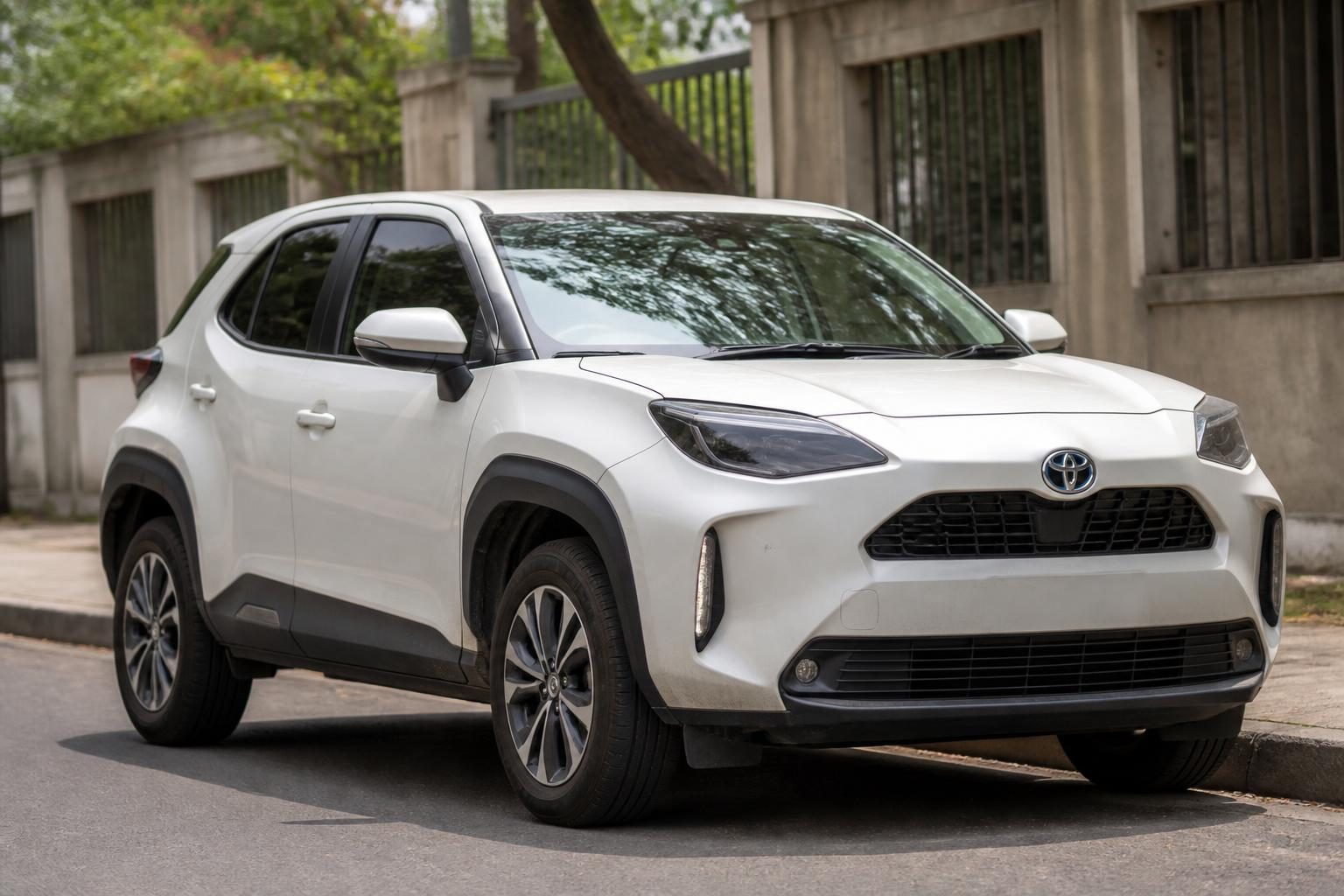 2020 Toyota Yaris Cross
It uses the same M15A-FXE 1,500cc three-cylinder hybrid engine as the Aqua, with an automatic gearbox and front-wheel drive. The body is taller and wider — 4,180 mm long, 1,765 mm wide and 1,590 mm tall — with 12 m³ of quoted dimension against the Aqua's 10 m³. That extra height is the point. It handles broken tarmac and graded murram far more comfortably than a low hatchback, without being a serious off-roader. This 2020 example shows 99,000 km at auction grade 4, described on the sheet as excellent condition, with no damage recorded by the in-house inspection.
Who it suits: families who leave Dar occasionally and want road presence without a 2,000cc-plus fuel and duty bill.
Three More Options Worth a Look
Toyota Yaris 2023
The 2023 Toyota Yaris runs the M15A-FXE 1,500cc hybrid system and returns 30.2 km/L on the WLTC cycle, according to Everycar.jp. Cut that by 10% for Dar conditions and you get roughly 27.2 km/L — about TZS 189,200 a month. It is also the low-mileage pick of this group at 53,000 km, roughly half what the other cars have covered. The body is a slightly shorter 3,940 mm hatchback. Auction grade 4, automatic, front-wheel drive, five seats, and it sits in the $10,000 to $15,000 band.
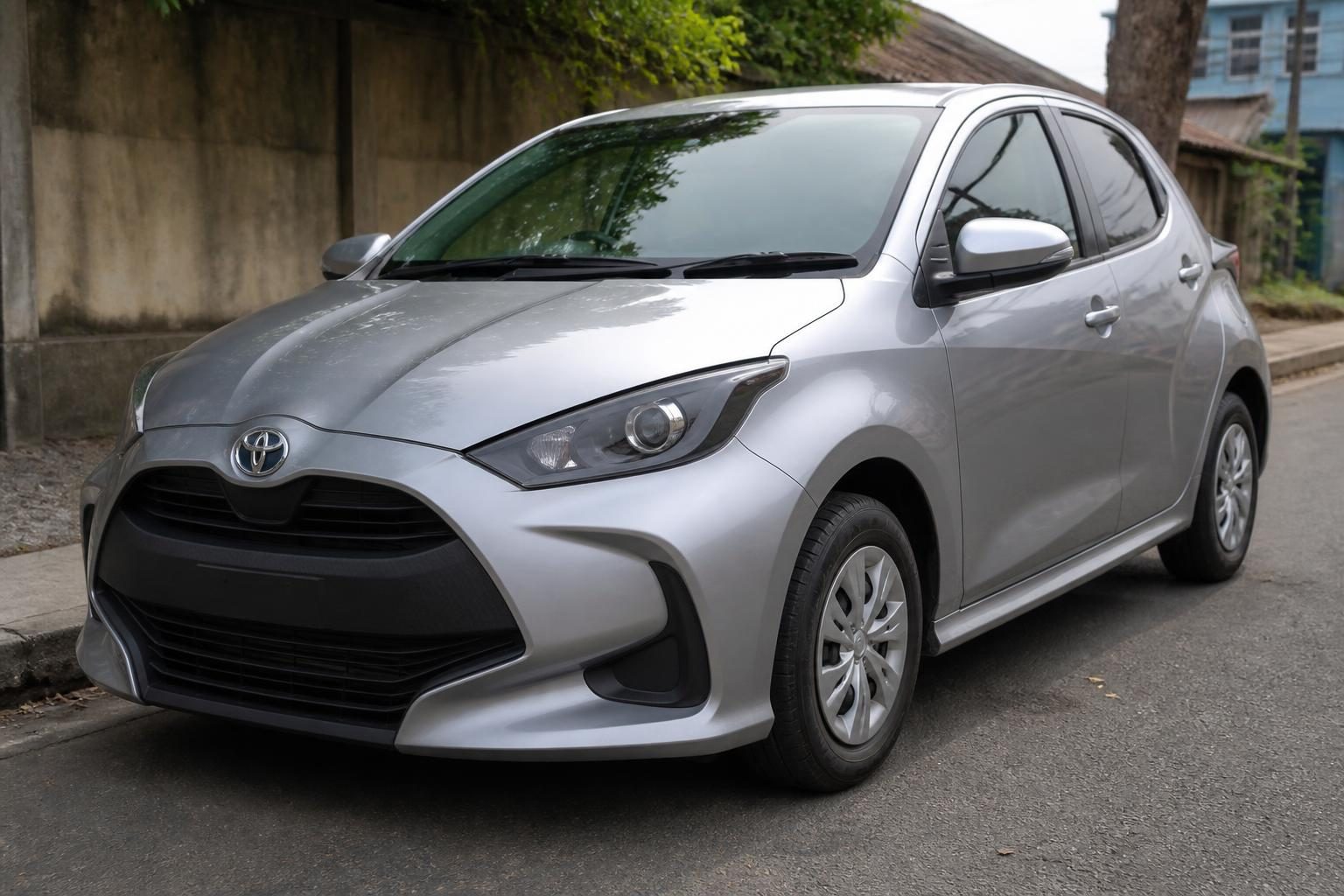 2023 Toyota Yaris
Honda Fit 2018
The 2018 Honda Fit hybrid is the best-value option for buyers who need the most cabin space under $10,000. Honda Japan's catalogue lists the GR3 hybrid at 36.4 km/L on the JC08 cycle — JC08 overstates more than WLTC, so a realistic Dar es Salaam figure is closer to 26 km/L, or roughly TZS 197,800 a month. Its LEB 1,500cc four-cylinder DOHC engine is the strongest on paper here at a 110 power rating with a 13.5 compression ratio. The Fit's packaging is famously clever: a 1,935 mm cabin length and 1,280 mm cabin height make it the roomiest interior in this list. At 109,000 km and auction grade 3.5, the inspection flags two items honestly — widespread paint wear on the rear panel and a noticeable dent on a side door. As a 2018 car, it also attracts the age-related excise surcharge on import.
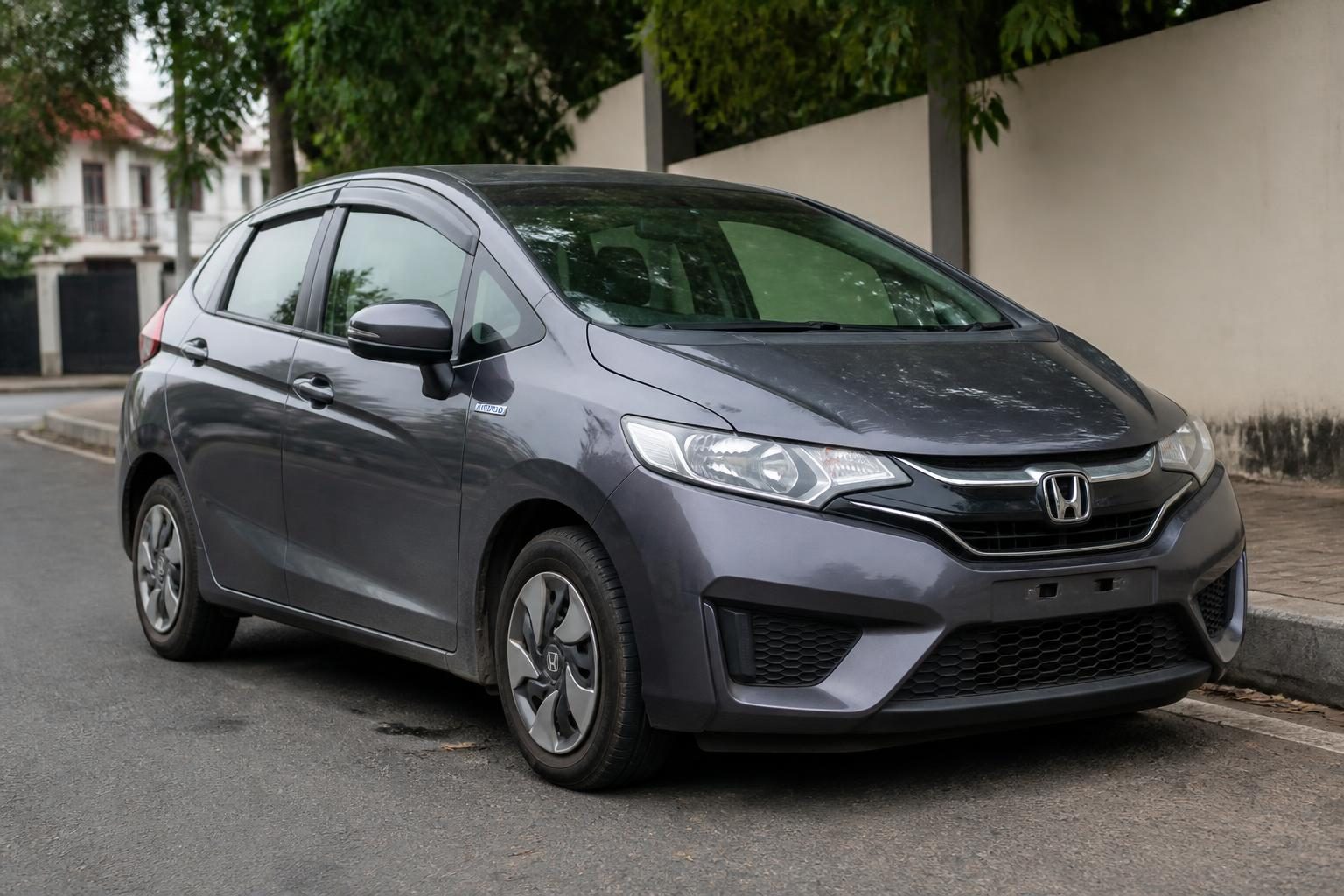 2018 Honda Fit
Suzuki Swift 2018
The 2018 Suzuki Swift is the tightest-budget option in this shortlist, and the only petrol-only car here. Without a hybrid system, budget around TZS 380,000–400,000 a month in fuel on the same 1,320 km commute — close to the non-hybrid benchmark. Its K12C 1,200cc four-cylinder DOHC engine carries a 91 power rating and a 12.5 compression ratio, driving the front wheels through a manual gearbox, which is worth knowing before you commit. At 31,000 km and auction grade 4.5, it is the best-condition car in this shortlist by some margin. It carries the age surcharge as a 2018 model.
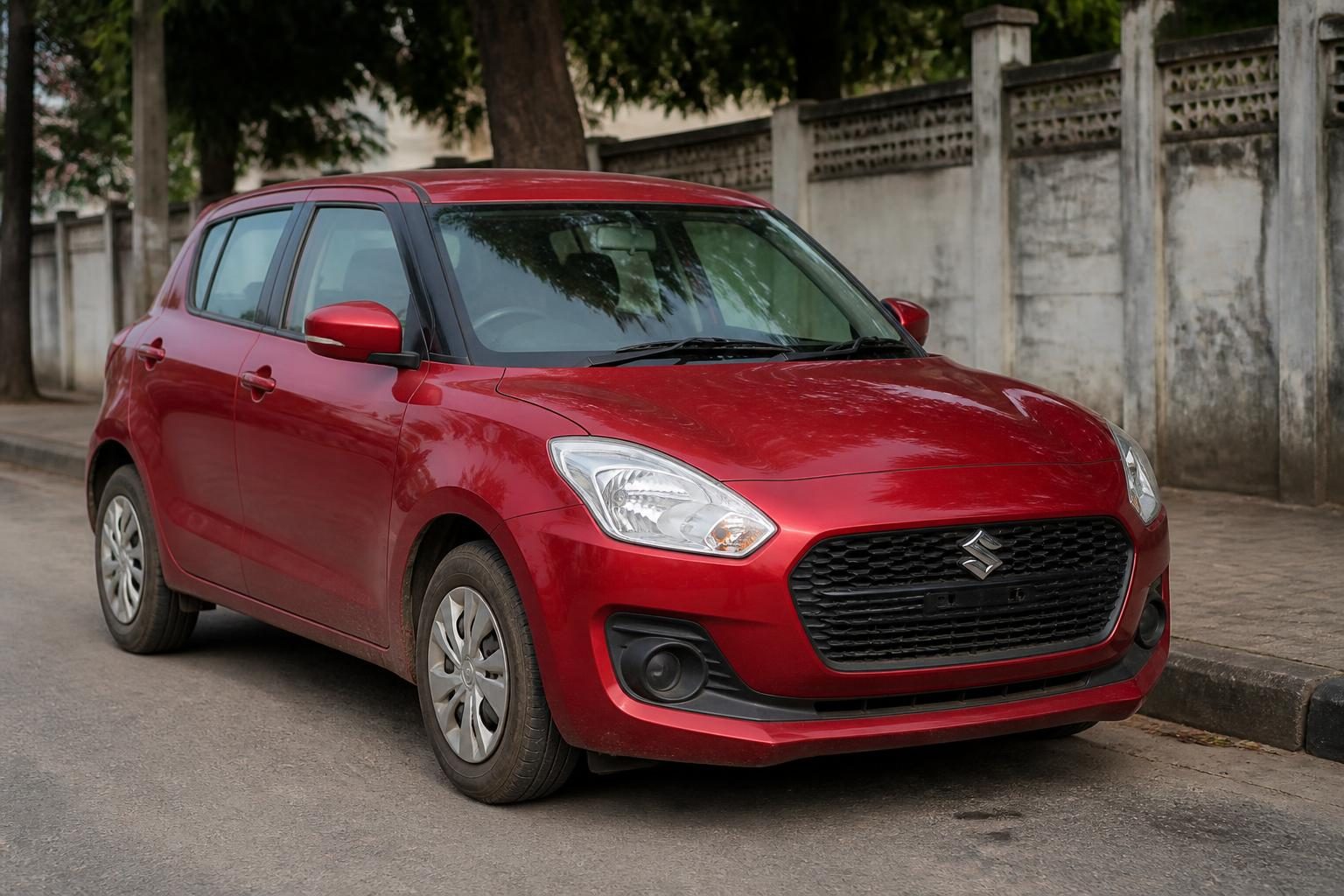 2018 Suzuki Swift
What Does the Fuel Saving Actually Add Up To?
Run the Aqua instead of a typical 1.5-litre non-hybrid for five years and the fuel saving alone is roughly TZS 13.4 million. That is TZS 171,500 a month against TZS 395,600, repeated 60 times. It is a deposit on a second vehicle, or several years of school fees.
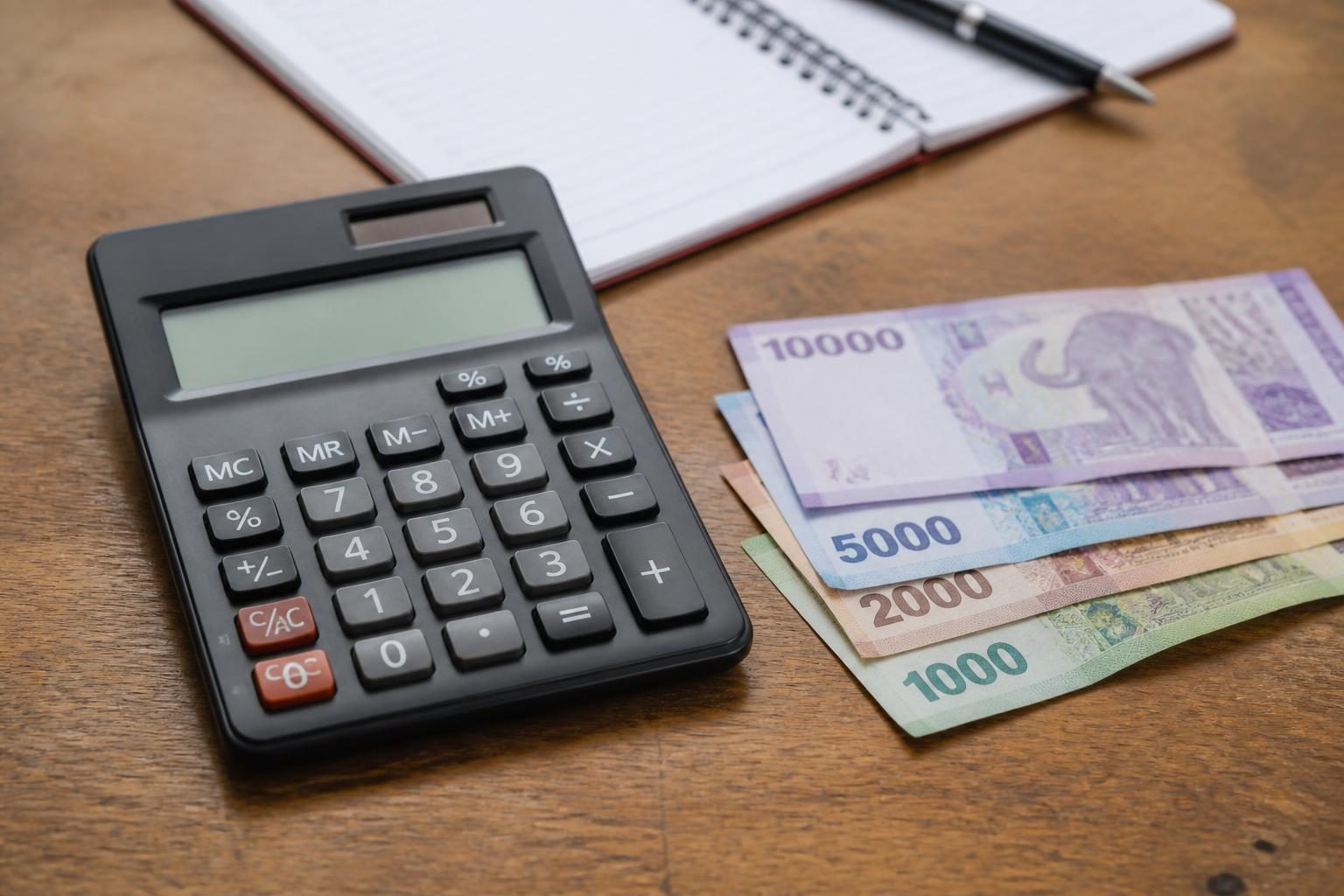 Calculator and Tanzanian shilling notes on a desk for budgeting.
Two honest caveats. First, the arithmetic assumes 1,320 km a month; if you drive less, the gap narrows proportionally. Second, EWURA revises cap prices monthly, so the figures above are a snapshot of August 2026. You can check the current cap yourself by dialling *152*00# on your mobile.
How Does Engine Size Affect Your Import Duty?
Engine capacity sets the excise bracket, so the same choice that lowers your fuel bill also lowers one line on your duty bill. As published on Carbarn's import rules and regulations page, excise is 0% up to 1,000cc, 5% from 1,001cc to 2,000cc, and 10% above 2,000cc. Every car in this article sits in the middle bracket, so a 2,500cc SUV pays double the excise rate on the same CIF value. Tanzania's Finance Act 2025 (effective 1 July 2025) introduced a revised age surcharge: 10% for vehicles aged 5–8 years, 15% for vehicles aged 8–10 years, and 30% for vehicles over 10 years. That is why the two 2018 cars in this article carry an age levy.
One thing to be clear about: a listed USD price covers the vehicle, shipping and inspection. It does not include import duty, excise, VAT or customs clearance. Those are paid separately, and the final figures come on your proforma invoice.
Where Can You Find These Cars in Tanzania?
Every model here is sourced directly from Japan by Carbarn Tanzania, which owns each vehicle outright rather than brokering someone else's stock. Two condition reports come with every listing before you pay anything. The first is the official Japanese auction sheet with its grade. The second is an in-house Carbarn inspector's report covering tyre tread, underbody condition, interior smell, and any dents or paint wear. Each vehicle page also carries an "Estimated landed cost in Tanzania" panel breaking down customs duty, excise, levies and registration for that specific car.
Browse by model at carbarn.tz/cars/toyota/aqua, carbarn.tz/cars/nissan/note, or carbarn.tz/cars/toyota/yaris-cross. Cars are shipped RoRo to Dar es Salaam with a sea transit of 25 to 35 days. Payment runs through Carbarn Japan by bank transfer or card. Invoices, inspection sheets, the bill of lading, and live vessel tracking all sit in your dashboard. If you want the process explained step by step first, the buying guide at carbarn.tz/how-to-buy walks through it from Japan to the port.
Which One Makes Sense for You?
Lowest monthly fuel cost on a Dar commute: The Toyota Aqua, at roughly TZS 171,500 a month and under $10,000.
Smoothest city drive: The Nissan Note e-POWER, for the electric-motor drivetrain, in a similar price band.
Mixed city and upcountry use: The Toyota Yaris Cross, for the ride height, in the $10,000 to $15,000 range.
Lowest odometer reading: The 2023 Toyota Yaris at 53,000 km, with estimated monthly fuel of roughly TZS 189,200.
Most interior space for the money: The 2018 Honda Fit, under $10,000, with estimated monthly fuel around TZS 197,800.
Tightest purchase budget: The 2018 Suzuki Swift at grade 4.5, under $8,000, provided you are comfortable with a manual gearbox and a fuel bill of around TZS 380,000–400,000 a month.
Whichever way you lean, open the vehicle page and read its landed-cost estimate before you decide. The purchase price is only part of the number that matters.