Choosing between a Toyota Harrier and Subaru Forester can feel like choosing between two different ideas of an SUV. The Harrier looks more polished and relaxed. The Forester promises stronger road confidence and more character.
The real answer depends on your roads. Do you mostly drive through Dar es Salaam traffic, or do wet roads, gravel and upcountry trips matter more? In 2026, the selected Harrier listing shows 130,795km and grade 4, while the selected Forester listing shows 78,000km and grade 3.5. Those details matter as much as the badge.
Quick Answer
- Choose the Toyota Harrier for comfort, quiet cruising and mainly paved roads.
- Choose the Subaru Forester for 4WD traction, mixed surfaces and stronger road character.
- Toyota’s 2017 Harrier 2.0 is rated at 16.0km/L on the JC08 cycle (Toyota, Harrier Elegance vehicle catalogue, 2017).
- Check the exact engine, drivetrain, auction grade and inspection evidence before choosing.
What Is the Real Difference Between the Toyota Harrier and Subaru Forester?
The selected Harrier is a 2.0-litre petrol, front-wheel-drive automatic with 130,795km, while the selected Forester is an automatic 4WD petrol vehicle with 78,000km. The Harrier favours refinement. The Forester favours traction and involvement.
FWD means the front wheels drive the vehicle. 4WD means power can be sent to all four wheels, which can help on some loose, wet or uneven surfaces. Neither layout removes the need for suitable tyres, careful driving and a condition check.
| Category |
Toyota Harrier |
Subaru Forester |
| Main character |
Refined and comfort-led |
Active and road-confidence focused |
| Selected fuel |
Petrol |
Petrol |
| Selected drivetrain |
FWD |
4WD |
| Transmission |
Automatic |
Automatic |
| Selected mileage |
130,795km |
78,000km |
| Auction grade |
Grade 4 |
Grade 3.5 |
| Best fit |
Urban roads and family cruising |
Wet roads, gravel and mixed surfaces |
| Main caution |
Age, mileage and FWD suitability |
Condition and exact variant confirmation |
The Harrier is a five-seat SUV, but the selected Forester page does not show a specification block, so confirm its seating before purchase. Model names do not tell the whole story. A 2.0-litre petrol Harrier is different from the newer 2.5-litre hybrid. A Forester 2.0i is different from a 2.0XT turbo.
That distinction matters in Tanzania. Engine size affects import costs, while drivetrain changes how the vehicle suits your daily routes. Before comparing comfort or performance, compare the exact listing.
Is the 2015 Toyota Harrier the Comfort-Led Choice?
The selected 2015 Toyota Harrier, from the Toyota Harrier model range, records a 2,000cc petrol engine, FWD, automatic transmission, 130,795km and grade 4. It suits buyers who want a calm, polished SUV for paved roads, traffic and family travel.
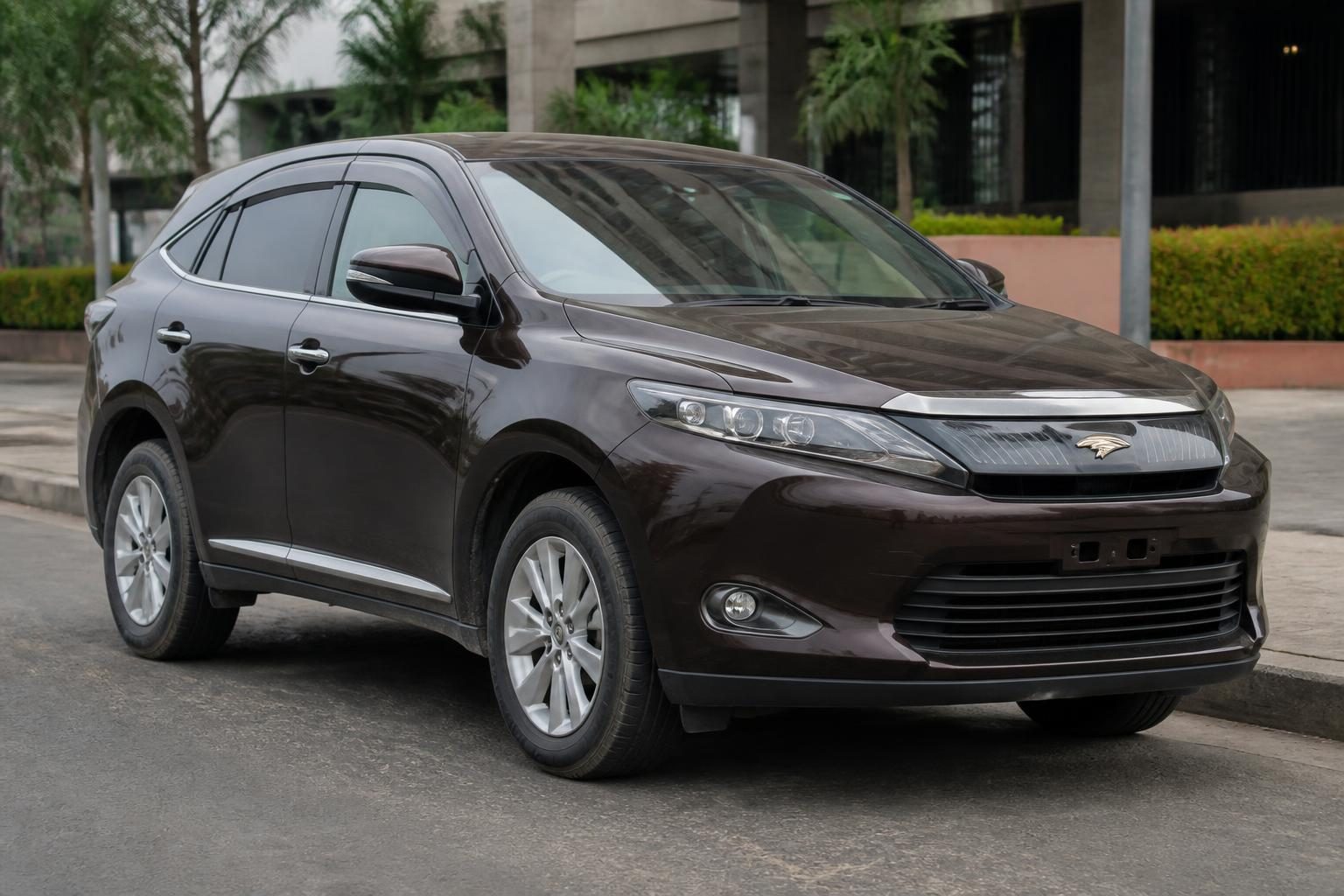 2015 Toyota Harrier
What does the selected Harrier tell you?
The Carbarn page lists Toyota’s 3ZR-FAE four-cylinder petrol engine for this vehicle. Toyota’s 2017 reference catalogue gives the related 1,986cc engine 151PS, 193Nm, FF drive and a CVT (Toyota’s official 2017 Harrier figures, 2017).
That same official reference lists 4,725mm length, 1,835mm width and 1,690mm height. The selected 2015 vehicle page records a closely related 4,720mm length, with the same width and height. Use the listing page for the vehicle’s final specification.
The Harrier’s equipment supports its comfort-led role. The selected page records air conditioning, power windows, UV-filter glass and a power front seat. Those features won’t transform a difficult road, but they make long urban trips easier.
The catch is its age and mileage. Auction grade is the Japanese auction’s assessment of a vehicle’s overall condition, not a guarantee of mechanical condition. Grade 4 is useful auction evidence, but it should be read with the inspection report. The page also records light fender surface marks, 4mm front and rear tyre tread, and a clean underbody.
Toyota’s 2017 Harrier 2.0 reference is a five-seat, 1,986cc petrol SUV with 151PS, FF drive and 16.0km/L on the JC08 cycle. The Harrier therefore suits buyers who mainly use paved roads and value relaxed urban travel. The selected 2015 example still needs separate scrutiny because its 130,795km odometer reading, grade 4 auction result, tyre tread and condition notes belong to that individual vehicle, not the 2017 catalogue reference (Toyota’s official 2017 figures, 2017; 2015 Toyota Harrier vehicle page, 2026).
For a newer alternative, the 2021 Toyota Harrier Hybrid listing records a 2,500cc hybrid system, FWD, automatic transmission, five seats, 83,000km and grade 4. It is smoother in concept, but it is not the same vehicle as this 2015 petrol Harrier.
2015 Subaru Forester: The 4WD Alternative
The selected 2015 Subaru Forester, from the Subaru Forester model range, records petrol fuel, automatic transmission, 4WD, 78,000km and grade 3.5. It suits buyers who value traction and mixed-road confidence more than a premium cabin feel.
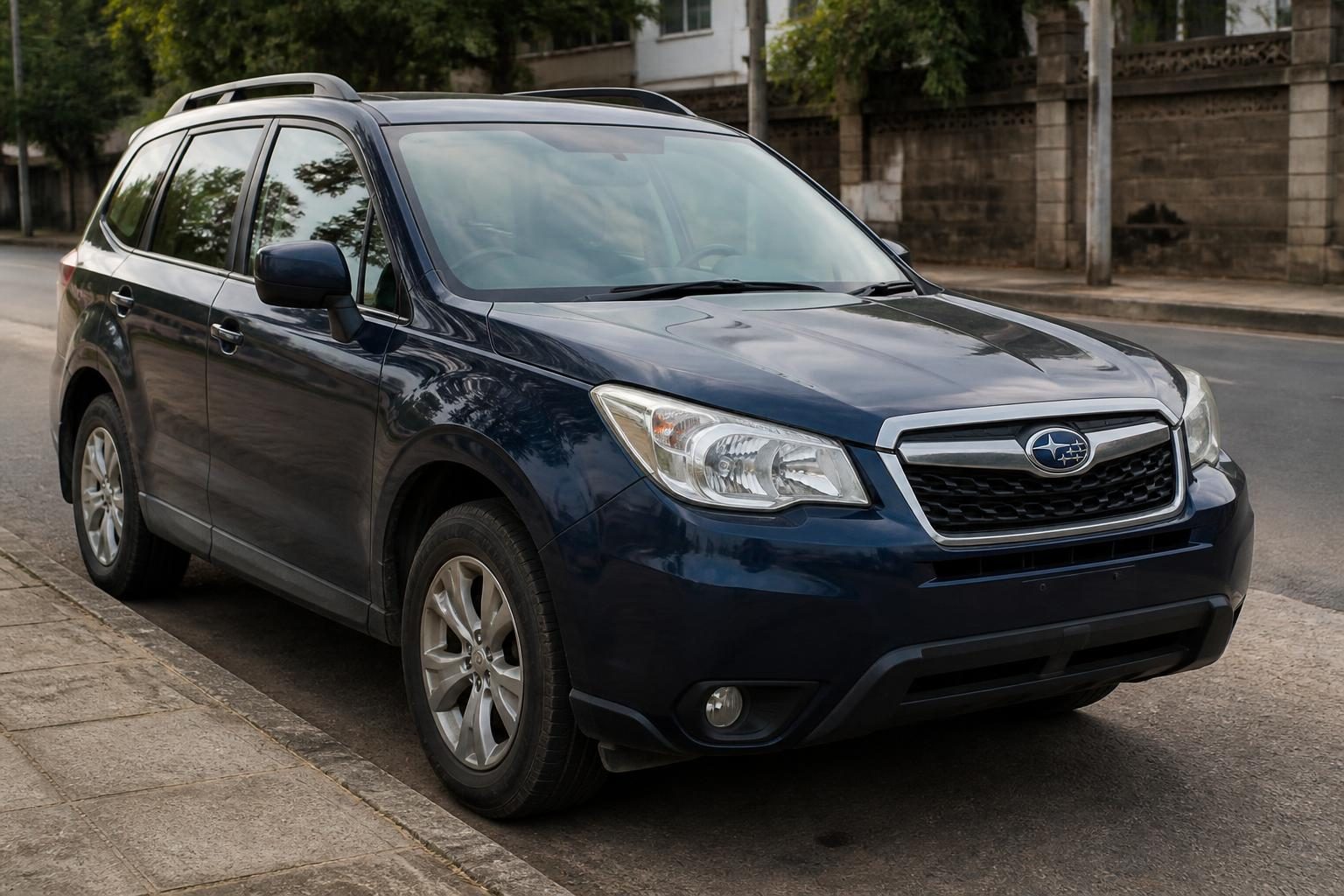 2015 Subaru Forester
What makes this Forester different?
The listing confirms 4WD and automatic transmission, but its current page does not show a specification block. That means the turbo status, engine output and EyeSight equipment are not verified for this individual vehicle.
This is where buyers need to slow down. The page lists condition evidence, including a grade 3.5 auction result, 5mm front and rear tyre tread, and three documented exterior notes. Those notes include rear spoiler paint wear, a rear door dent and clear-coat peeling on the front bumper.
If wet roads, loose gravel or uneven approaches are part of your route, treat the selected Forester’s 4WD layout as one factor in the decision. Check the tyre condition, underbody and inspection evidence, then choose a speed and route that suit the conditions.
A separate 2016 Forester page records a 2,000cc petrol engine, manual transmission, 4WD, five seats, 78,000km and grade 3.5. That example should not be merged with the selected 2015 automatic vehicle.
The selected 2015 Forester is a 78,000km, grade 3.5 automatic 4WD vehicle. Its individual listing confirms the drivetrain, but it does not confirm a turbocharged engine, engine output or EyeSight equipment. The official 2015 XT catalogue is therefore a separate reference, not proof of this vehicle’s variant. Before treating it as an XT performance vehicle, check the auction sheet, engine variant, tyre condition, underbody and inspection report (2015 Subaru Forester vehicle page, 2026; Subaru’s official 2015 XT specifications, 2015).
Which Has the Better Engine Character and Fuel Use?
In Toyota’s 2017 catalogue, the Harrier 2.0 produces 151PS and returns 16.0km/L on JC08, while Subaru’s 2015 Forester 2.0XT reference produces 280PS and 350Nm at 13.2km/L JC08 (Toyota, Harrier Elegance vehicle catalogue, 2017; Subaru, Forester 2.0XT EyeSight catalogue, 2015). The Forester is stronger, but the Harrier is calmer.
JC08 is an older Japanese laboratory fuel-economy test cycle. Its result is useful when comparing matching variants, but it is not a promise of consumption in Dar es Salaam traffic.
Toyota Harrier 2.0 petrol
Toyota’s 2017 Harrier 2.0 reference uses a naturally aspirated 1,986cc engine, a CVT and front-wheel drive. Its 151PS and 193Nm are adequate for normal urban and highway use, especially when comfort matters more than sharp acceleration. Confirm the selected 2015 vehicle’s exact variant before applying these reference figures.
Toyota’s 16.0km/L JC08 figure is an official laboratory rating. It is not a promise of consumption in Dar es Salaam traffic, where air conditioning, congestion, tyre pressure and driving style change the result.
Subaru Forester 2.0XT
The official 2015 2.0XT EyeSight reference uses a 1,998cc turbocharged boxer engine and specifies unleaded premium petrol. It produces 280PS and 350Nm, with full-time 4WD, a CVT and a 13.2km/L JC08 rating (Subaru’s official 2015 XT specifications, 2015).
That is the source of the Forester XT reference’s turbo character. The power and torque gap suggests stronger acceleration, particularly when climbing or overtaking. However, those figures apply to the official XT reference, not automatically to the selected 2015 listing.
Where does the newer Harrier hybrid fit?
The 2021 example uses a 2,500cc hybrid powertrain, FWD, automatic transmission and 178PS according to its vehicle page (2026). It is a smoother city-focused option, but its larger engine size changes the import-cost discussion.
JC08 and WLTC are different Japanese test cycles. Compare fuel figures only when the exact model, drivetrain and test cycle match.
| Variant |
Character |
Main appeal |
Main caution |
| Harrier 2.0 petrol |
Calm and naturally aspirated |
Urban comfort |
Age and mileage |
| Harrier 2.5 hybrid |
Smooth and quiet |
Stop-start traffic |
Larger engine and different cost profile |
| Forester 2.0i |
Direct and 4WD-focused |
Mixed-road confidence |
Exact condition |
| Forester 2.0XT |
Strongest acceleration |
Turbo character |
Variant and service scrutiny |
Which SUV Fits Your Budget and Ownership Plans?
In a September 2026 snapshot, Harrier examples sit broadly from the low-$10,000s to the high-$10,000s, while Forester examples sit around the low-$6,000s before import-related charges. The Forester has the lower entry band in that snapshot, but age and condition change the calculation.
The difference reflects more than the badge. Model year, mileage, auction grade, drivetrain, hybrid equipment and turbo hardware all affect the vehicle’s value. A lower purchase figure can also come with greater inspection or maintenance risk.
The Japan-stock listing price covers the vehicle, shipping and inspection. It is not the Tanzania landed price, and does not cover import duty, VAT or customs clearance. Use the individual vehicle page’s Estimated landed cost in Tanzania panel for a real vehicle-specific figure.
Carbarn’s Tanzania import rules and landed-cost guidance describes additional excise treatment for vehicles older than eight years. Treat that as Carbarn’s guidance, not independent confirmation of the current legal rate. The official Tanzania Trade Portal procedure page provides used-motor-vehicle import procedure information, but it does not independently verify the specific rate here. Confirm the current figure through TRA before comparing vehicles from different years.
| If your priority is... |
Better fit |
Reason |
| Mostly Dar es Salaam traffic |
Harrier |
More comfort-led and relaxed |
| Quiet family cruising |
Harrier |
Stronger refinement focus |
| Wet roads and uneven approaches |
Forester |
4WD configuration |
| Lower entry budget |
Forester |
Lower general USD band |
| Stronger acceleration |
Forester XT, if verified |
Turbo output and 350Nm reference |
| Simpler petrol layout |
Harrier 2.0 |
Naturally aspirated FWD reference |
| Newer hybrid technology |
2021 Harrier Hybrid |
Newer generation and hybrid system |
| Frequent upcountry travel |
Forester |
Better mixed-surface fit, subject to condition |
The verdict is straightforward. Choose the Harrier for cabin comfort and mainly paved roads. Choose the Forester for 4WD confidence and a more active driving feel. Skip the turbo assumption unless the individual listing proves it.
How Should You Compare the Listed Vehicles Before Choosing?
In 2026, both model pages show two inspection-led choices, but the Harrier range covers 2015 to 2021 while the Forester range covers 2015 to 2016 (Toyota Harrier vehicles for Tanzania, 2026; Subaru Forester vehicles for Tanzania, 2026). Listing against listing is safer than comparing badges.
Check the model year, engine size, drivetrain, transmission, odometer and auction grade first. Then read the auction sheet and the post-purchase inspection report. Pay special attention to tyres, underbody condition, dents, paint wear and any notes affecting the engine or transmission.
Carbarn Tanzania lists vehicles owned for direct import from Japan to Dar es Salaam. Each vehicle is shown with an official Japanese auction sheet and an in-house inspection report, with EAA pre-shipment certification where stated. Any arrival roadworthiness inspection should be confirmed separately, as it is not established here as included in the listed price. The USD listing price covers the vehicle, shipping and inspection, while duty, VAT and customs clearance remain separate. Buyers can use per-vehicle landed-cost estimates, dashboard invoices, inspection reports, bills of lading, certificates and live vessel tracking, with payment support from Japan by bank transfer or card. The How to Buy guide explains the next steps.