You want one car that handles Monday morning on Nyerere Road and a Saturday run to family in Morogoro. Those are two very different roads, and most buyers only discover how different after the money is gone. Then the second problem arrives: engine size decides which excise band TRA puts your vehicle in, so the body style you pick quietly changes your duty bill.
This guide sorts out both pressures. You will get the road data, the duty maths, real running costs in shillings, and the option a lot of buyers skip past entirely.
Quick Answer
- Road type decides more than body style. Tanzania's network runs to about 181,190 km, and 144,429 km of that sits under TARURA as district roads, of which only 2.31% are paved (TanzaniaInvest, reporting TARURA Executive Officer Engineer Victor Seff, September 2024).
- The duty gap is real. Engines above 2,000cc attract 10% excise; 1,001cc to 2,000cc attract 5%, as published on Carbarn's import rules page. On a $15,000 CIF value that is a $750 difference at the excise stage alone.
- Fuel punishes big engines in traffic. At TZS 3,898 per litre in Dar es Salaam (GlobalPetrolPrices.com, citing EWURA, August 2026), a hybrid compact and a 2.5-litre petrol SUV differ by roughly TZS 22,000 per 100 km.
- The overlooked middle: compact crossovers with 1,001cc to 2,000cc engines sit in the 5% band while carrying far more ground clearance than a saloon.
- No single answer fits everyone. How often you leave tarmac is the question that settles it.
Why Does This Decision Work Differently in Tanzania?
Tanzania's road network is roughly 181,190 km in total, and the district road layer alone accounts for 144,429 km. Only 2.31% of those district roads carry tarmac, about 3,338 km, according to TanzaniaInvest reporting TARURA figures from September 2024. That single number reframes the whole SUV versus sedan argument for local buyers.
On the trunk network the picture flips. Dar es Salaam's main corridors, the expressway, and the paved routes towards Morogoro, Arusha and Dodoma are properly surfaced. On that tarmac, ground clearance earns you nothing. Fuel economy, ride comfort and easy parking earn you plenty.
So the honest question is not "which body style is better". It is where the car spends its weekends, not just its weekdays.
 Once you leave the tarmac, ground clearance stops being a preference and becomes equipment.
The Two Driving Scenarios That Decide It
City and trunk roads. Dar es Salaam commuting, Arusha town driving, paved intercity runs. Smooth surfaces, heavy stop-start traffic, expensive parking. A sedan or a hybrid crossover is comfortably at home here.
District roads and upcountry travel. Unpaved for the overwhelming majority of their length, with washboard corrugation, rain damage and the occasional deep rut. Suspension travel and clearance become practical requirements.
SUV vs Sedan: How Do They Compare at a Glance?
Body style changes six or seven things at once, and buyers usually only weigh two of them. This table sets out the trade-offs side by side before we work through each case in detail. Read it as a scanning tool; the reasoning behind each row sits in the sections below.
| Factor |
Sedan |
SUV / Crossover |
| Ground clearance |
Lower, roughly 130 to 160mm |
Higher, roughly 180 to 230mm |
| Real-world fuel economy |
Better, especially hybrids |
Higher consumption |
| Excise band |
Usually the 5% tier |
Often the 10% tier on larger engines |
| Typical purchase price band |
Generally lower |
Generally higher |
| Long-trip passenger comfort |
Good |
Good to excellent |
| Unpaved district roads |
Limited |
Well suited |
| Parking in central Dar |
Easier |
More demanding |
| Resale demand in Tanzania |
Solid |
Strong |
Is a Sedan the Right Choice for Tanzanian Roads?
For a large share of Tanzanian buyers, a sedan is simply the correct answer. Petrol in Dar es Salaam sat at TZS 3,898 per litre in August 2026 (GlobalPetrolPrices.com, citing EWURA), and in gridlock every extra litre per 100 km is money you spend twice a week, every week.
The numbers are not marginal. Owner-reported databases consistently put real-world consumption for the 2.5-litre petrol RAV4 at roughly 8 to 10 litres per 100 km under typical conditions; in Tanzania's heat and sustained city stop-start, the upper end of that range is a reasonable working figure. Owner reports compiled by BE FORWARD's Toyota Aqua fuel economy data put a Toyota Aqua hybrid in the region of 22 to 26 km/L in mixed use.
| Vehicle type |
Indicative real-world economy |
Fuel cost per 100 km at TZS 3,898/L |
| 1.5L hybrid compact |
~26 km/L |
~TZS 15,000 |
| 1.5L hybrid crossover |
~20 km/L |
~TZS 19,500 |
| 1.8L petrol sedan |
~15 km/L |
~TZS 26,000 |
| 2.5L petrol SUV |
~10.5 km/L |
~TZS 37,100 |
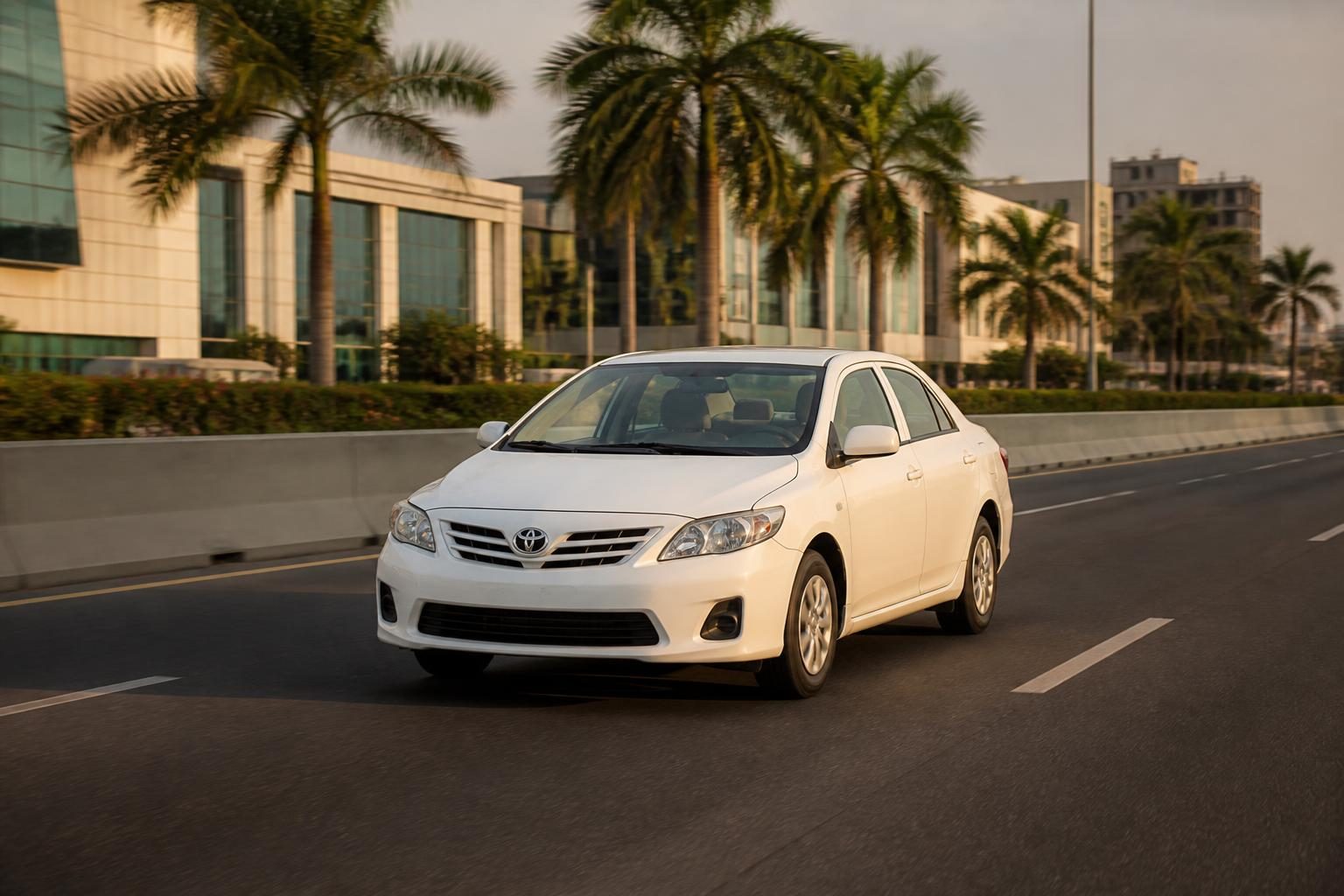 On Dar es Salaam's paved corridors, a sedan's lower weight and better economy do the real work.
Sedans in the 1.5 to 1.8-litre range also land in the 5% excise band rather than the 10% one. Lower fuel bills, a smaller duty bill and easier parking add up to a genuinely strong case. Our fuel economy guide for city driving and long trips digs further into the model-by-model detail, and the Toyota range is where most Tanzanian sedan buyers start looking.
The honest limitation: if your route regularly includes district roads, that low front bumper and 140mm of clearance will cost you in scraped underbody and cracked plastics.
Is an SUV Worth It on Tanzanian Roads?
An SUV earns its place on the roughly 141,000 km of unpaved district road that TARURA data implies, and no amount of careful driving substitutes for clearance. Higher suspension travel absorbs corrugation instead of transmitting it, and the extra load space matters when you are carrying a family plus luggage over four hours of dirt.
Who genuinely needs one? Buyers who travel upcountry regularly, families with young children doing long weekend runs, and businesses operating across several regions. Buyers based outside Dar, where paved coverage thins out quickly past the town boundary, tend to reach the same conclusion faster.
Be clear-eyed about the cost. A larger-engine SUV such as a 2.5-litre RAV4 sits above the 2,000cc threshold, which puts it in the 10% excise tier and raises the landed cost before a single litre of fuel is bought. That is worth factoring into your budget from the start rather than discovering it at clearance.
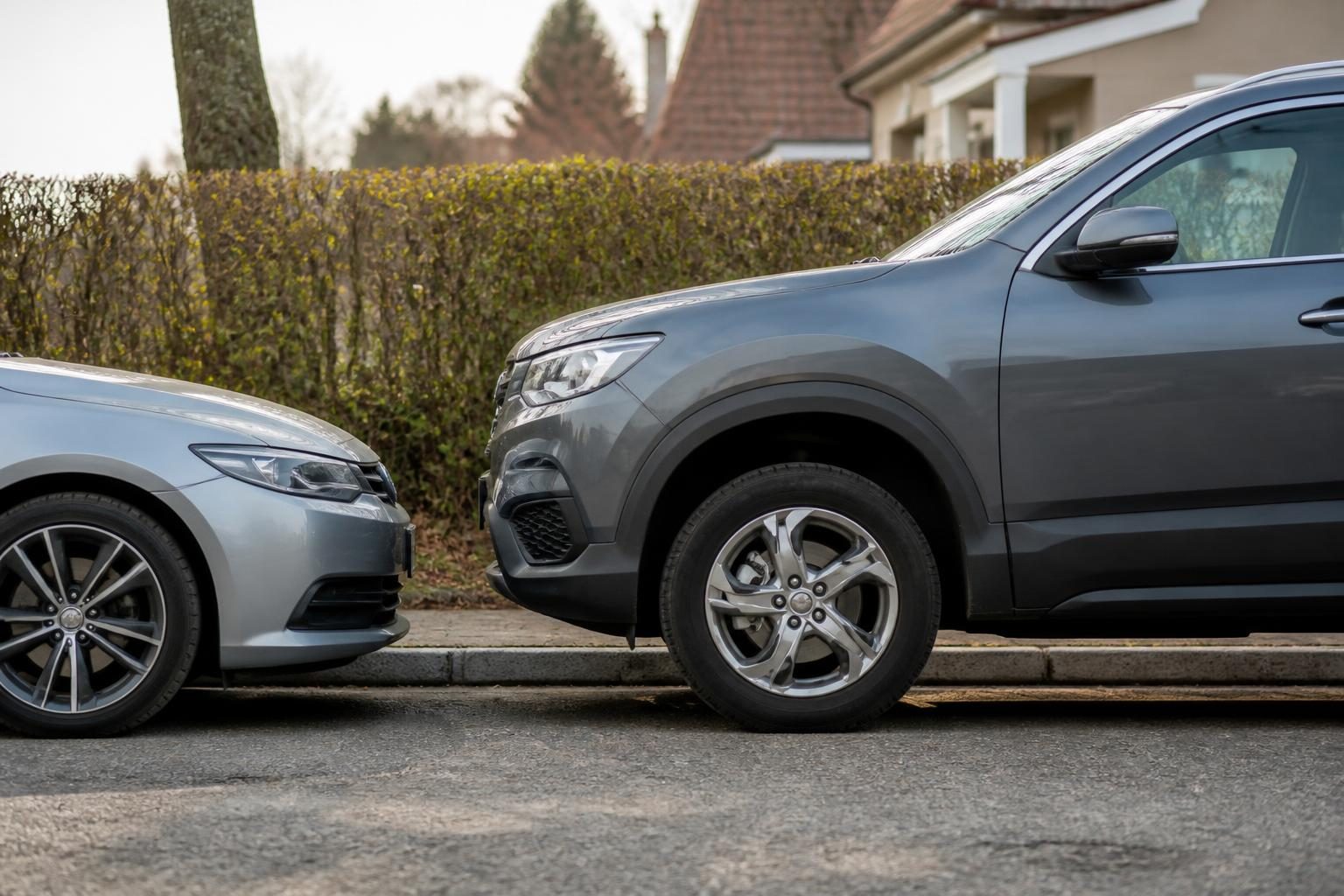 Forty to sixty millimetres of extra ride height is the difference between clearing a rutted verge and grinding across it.
One important qualification: not every SUV lands in the 10% band. Smaller-engine crossovers give you meaningful clearance at sedan duty rates, which is the next section. If you want the full-size option, the RAV4 listings and the Nissan range are the usual starting points.
Why Does Engine Size Change Your Duty Bill at Customs?
Engine capacity, not body shape, sets your excise band. As published on Carbarn's import rules and regulations page, which sets out the TRA duty structure, excise runs at 0% up to 1,000cc, 5% from 1,001cc to 2,000cc, and 10% above 2,000cc. Import duty of 25% of CIF value applies on top, with VAT and clearance charges separate again.
| Engine capacity |
Excise rate |
Excise on a $15,000 CIF value |
| Up to 1,000cc |
0% |
$0 |
| 1,001cc to 2,000cc |
5% |
$750 |
| Above 2,000cc |
10% |
$1,500 |
CIF means cost, insurance and freight: the value TRA assesses against, drawn from Japanese Yellow Book figures. So a 2.5-litre SUV and a 1.8-litre sedan of the same assessed value are $750 apart on excise alone, before import duty and everything after it.
Age stacks on top. Tanzania has no outright age ban, but the Finance Act 2025 (effective July 2025) replaced the old flat rate with a tiered penalty for non-utility vehicles: 15% additional excise for cars aged 8 to 10 years, and 30% for cars over 10 years old (AutoMag.tz's 2025 Tanzania duty breakdown, November 2025; carimports.co.tz import duty calculator guide, August 2026). Utility vehicles over eight years still attract 5%. That is why a cheap older SUV can land dearer than a newer small-engine car. Our guide to TRA duty and the age penalty walks through how the two interact.
Final figures always come on your proforma invoice, and the "Estimated landed cost in Tanzania" panel on each vehicle page turns these percentages into a number for one specific car.
The Middle Ground: Compact Crossovers Worth a Look
This is the category most buyers walk past, and it answers the Tanzanian road split almost exactly. Compact crossovers with engines between 1,001cc and 2,000cc sit in the 5% excise band while offering roughly 170 to 210mm of ground clearance, well above a standard saloon.
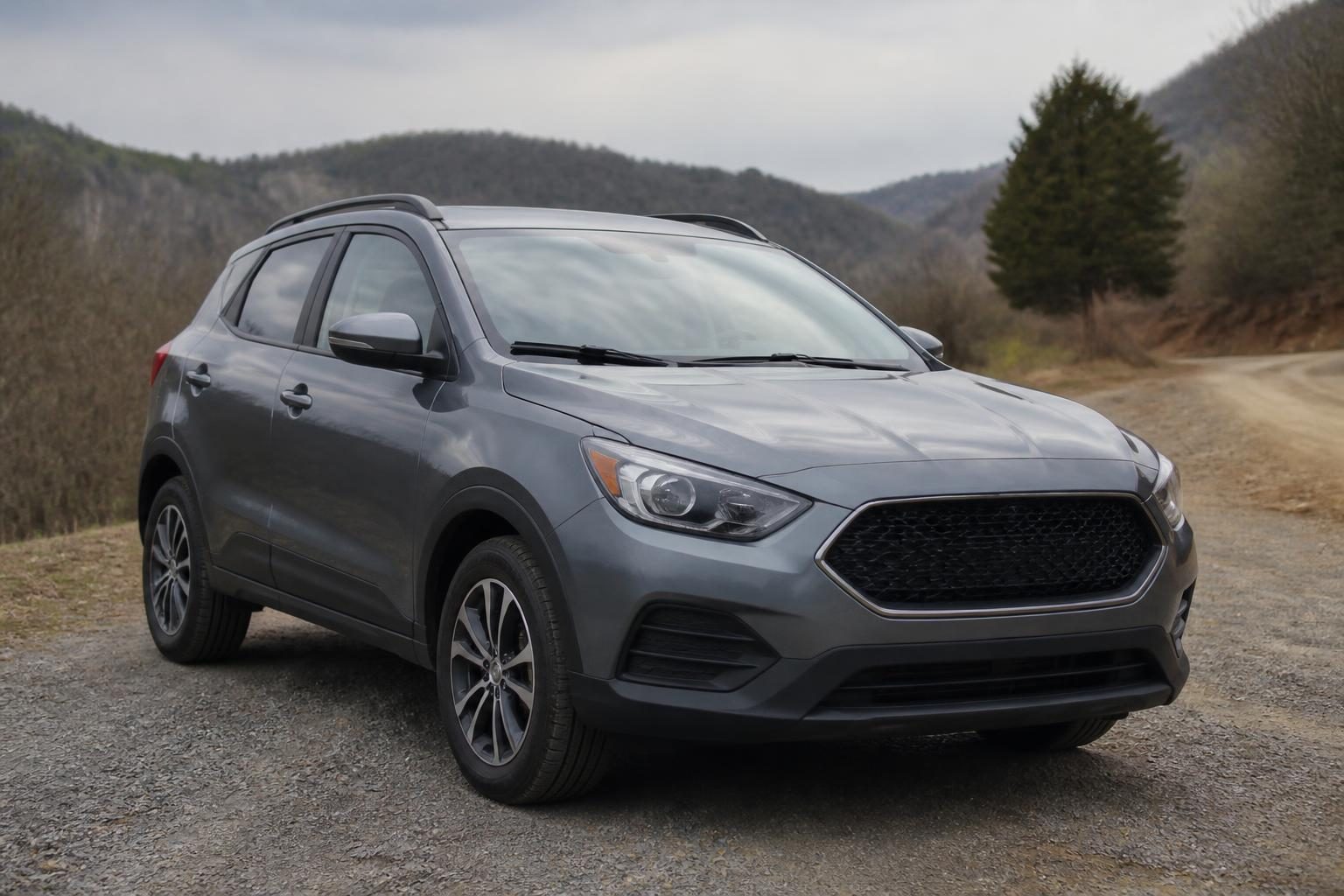 Compact crossovers pair sedan-band excise with clearance that copes with a graded dirt road.
In practice that means city tarmac all week, a graded district road at the weekend, and no 10% excise premium. Many are hybrids, which keeps the fuel bill closer to a sedan than an SUV. The Yaris Cross listings show the shape of the category, with 1,500cc hybrid drivetrains across the current model codes.
The caveat matters though. For serious upcountry work on badly rutted tracks, a full SUV with more clearance and longer suspension travel will handle it better and last longer doing it.
Which Option Makes Sense for You?
Path A: mostly Dar es Salaam and paved trunk roads. A hybrid sedan or hatchback in the 1.5 to 1.8-litre range makes strong financial sense. Lower excise band, far better economy in stop-start traffic, easier to park in town.
Path B: mixed city and occasional district roads. A compact crossover in the 1,001cc to 2,000cc band gives you the best balance available: usable clearance, the 5% excise tier, and fuel figures you can live with.
Path C: frequent district roads, upcountry routes or rural business. A full SUV is justified by the conditions, and pretending otherwise costs you in repairs. Go in with clear eyes on the duty bill.
If you are still unsure which category fits, that is exactly what the landed-cost breakdown on each vehicle page is for.
Importing the Right Car Direct from Japan
Carbarn lists vehicles across all three categories, sedans, compact crossovers and full SUVs, every one owned by Carbarn and shipped direct from Japan to Dar es Salaam by RoRo, with a sea transit of 25 to 35 days. Because there is no broker in the middle, the car you order is the car that ships.
Two inspection reports come before you pay: the official Japanese auction sheet with its grade, and Carbarn's own in-house inspection report with photographs and defect comments. EAA pre-shipment certification is included, and the listed USD price covers the vehicle, shipping and inspection. Duty, VAT and clearance are paid separately to TRA.
Each vehicle page carries an "Estimated landed cost in Tanzania" panel, which is where the excise percentages above become a real figure for a real car. Browse the full inventory by body type, or read the step-by-step buying guide to see how the process runs.